By Matt Nash, Founder, Just Seal It. 20+ years on-site. 15,000+ surfaces sealed. Featured on The Block. Published 13 May 2026.
The stone on your path, pool surround, or terrace is absorbing moisture from the day it goes down.
That is not a defect. That is how natural stone works. The capillary structure that gives stone its character is the same structure that draws in water, mineral salts, pool chemicals, and contaminants over time.
The visible signs show up later. Usually three to five years in. Efflorescence on grout lines. Staining in the stone face that routine cleaning will not shift. The kind of slow change that is easy to miss until it is hard to fix.
A penetrating stone sealer stops that mechanism before it starts. It soaks into the mineral structure, bonds with the stone from inside, and creates a barrier that moisture and contaminants cannot pass through. You cannot see it after application. The stone looks exactly the same. The outcome three to five years later does not.
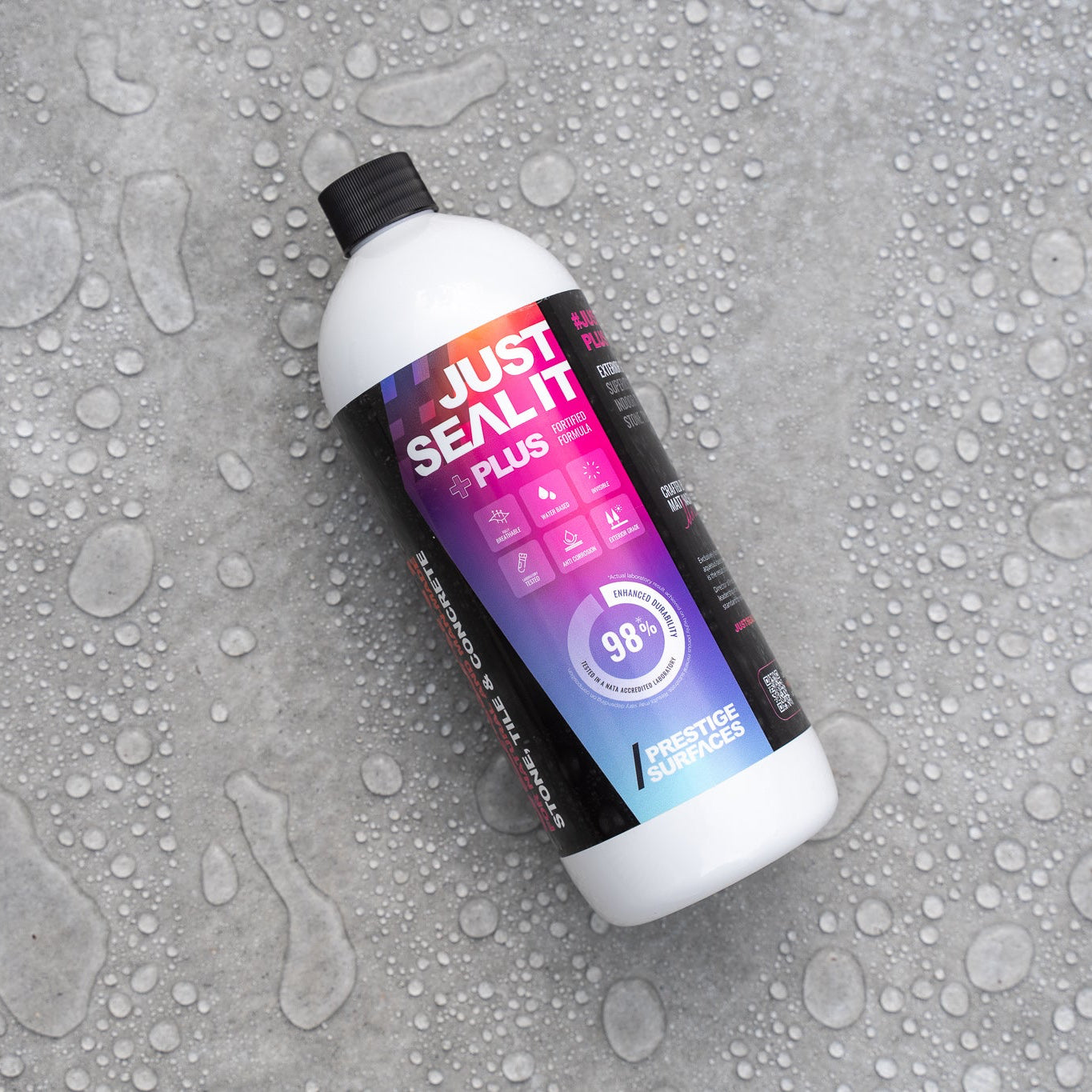
Short version: A penetrating sealer soaks into the mineral structure of natural stone and creates a hydrophobic barrier below the surface. Invisible after application. No film to peel, yellow, or delaminate. Almost every hard surface benefits from sealing: limestone, travertine, sandstone, bluestone, marble, granite, slate, terracotta, brick, grout, concrete. Apply two coats of Classic Sealer or Plus Sealer wet-on-wet to a clean, bone-dry surface. Full cure takes 30 days. A maintenance coat every 3 to 5 years keeps protection at peak levels.
Why natural stone needs a penetrating sealer

Natural stone is porous. How porous depends on the type, but the mechanism is the same across all of them. Water gets in. It carries dissolved mineral salts with it. As moisture evaporates at the surface, those salts crystallise inside the stone's capillaries. The crystals expand and contract with temperature changes, forcing the pore walls apart from within.
Efflorescence is the visible sign of that process. In pool or coastal environments, corrosive compounds work their way deeper with each cycle of wetting and drying. The material does not fail suddenly. It degrades slowly, then noticeably.
In independent testing at a NATA-accredited laboratory, unsealed natural stone samples lost 6.7% of their mass over the test period. Sealed samples lost 0.1%. That gap represents years of efflorescence, staining, and surface deterioration that simply did not happen.
When stone is first installed, it looks the same either way. Sealed or not. You will not really notice a difference on day one. The difference shows later. Three to five years on, sealed surfaces clean up easily. The ones that were not sealed usually do not come back the same.
Which surfaces need sealing
The short answer: almost certainly yours.
Limestone, travertine, sandstone, bluestone, marble, granite, slate, basalt, terracotta, brick, rendered surfaces, grout, concrete. All of these absorb moisture to some degree. All benefit from a penetrating sealer.
The one exception is fully glazed porcelain tile faces. The fired glaze is completely impervious. A penetrating sealer has nothing to bond with on the tile face. But the grout joints around glazed porcelain are still porous. Always seal the grout, even where the tiles themselves do not need it. More on that in our guide to whether porcelain tile needs sealing.
Unglazed or textured porcelain is a different story. Those surfaces do absorb. Seal them.
Granite varies in density. Most benefits from sealing. If you want confirmation, pour a small amount of water on the surface and wait 60 seconds. If the stone darkens, it is absorbing. Seal it.
For everything else: if it is a natural stone or masonry surface, indoors or out, it benefits from sealing. The cost of skipping it is years of staining and deterioration that a single correct application at the start would have prevented.
What penetrating sealer does inside stone

The sealer molecules are small enough to travel into the stone's pores. Once inside, they chemically bond within the mineral structure using modified silicone technologies and cure to a hydrophobic state.
In sandstone testing, our sealers penetrated to 11mm depth. That is not a surface treatment. That is structural protection working through most of the exposed stone face. The Natural Stone Institute provides independent reference on sealer penetration standards for natural stone.
Water and contaminants are repelled before they can reach depth. The stone still breathes normally because the sealer fills pore space without blocking it completely. Moisture vapour can still escape from below. Stone that cannot breathe eventually shows it.
After 30 days, the bond is extremely durable. The sealer does not flake, yellow, or peel. There is no maintenance cycle that involves stripping and reapplying a surface coating.
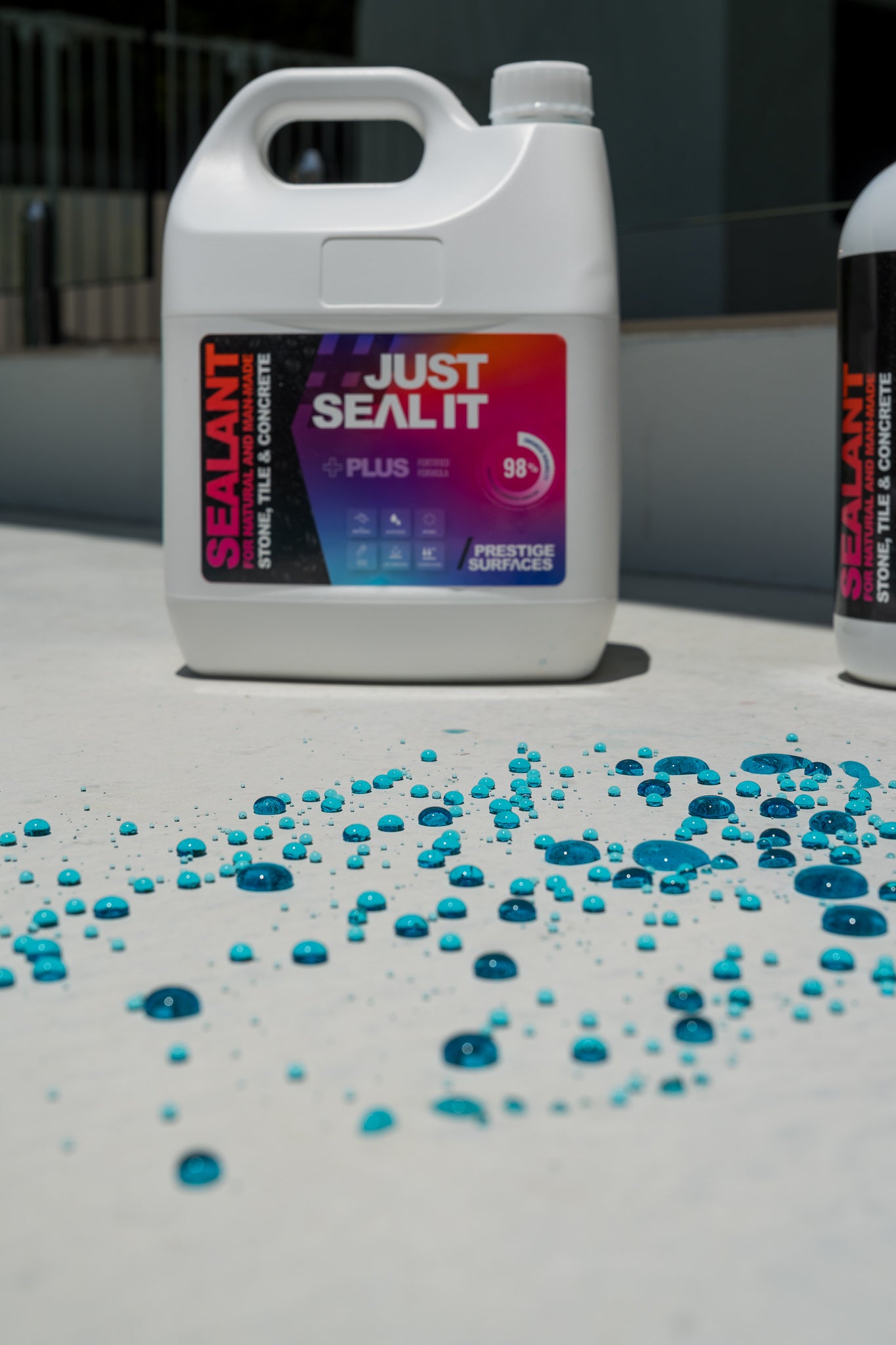
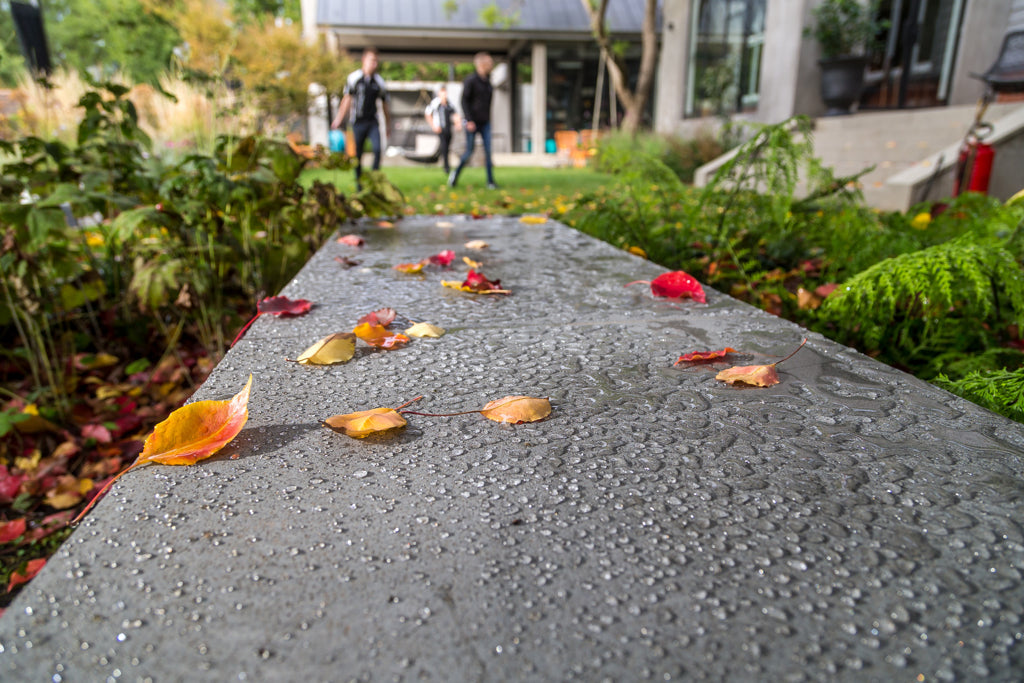
You may notice water beading on the surface after application. That reduces naturally over weeks and months as the surface layer weathers. It is a visible side effect, not the primary protection mechanism. A sealed surface that no longer shows visible beading is still protected. The barrier is below the surface, not on it.
For a full explanation of how penetrating sealers work across all surface types, see our penetrating sealer guide.
The topical trap: what goes wrong with the wrong product
Topical sealers include wet-look coatings, acrylic films, and surface lacquers. They sit on top of the stone. They are visible. Some are glossy. If you can see the sealer after it dries, it is the wrong type for natural stone.
The problem is moisture. Stone needs to breathe. When a topical film traps moisture below it, the moisture finds its way out by lifting the film. You end up with peeling, flaking, and a surface that needs stripping before it can be treated properly.
Removing a failed topical sealer from natural stone involves chemical stripping, mechanical preparation, and starting again from scratch. The cost of that process is usually more than a correct application would have been the first time.
Penetrating sealers have nothing sitting on the surface to peel or delaminate. They become part of the stone. That is what makes the difference over five or ten years of outdoor exposure.
How to prepare stone before sealing
Sealing over a dirty or damp surface is worth avoiding. Contamination in the pores reduces how fully the sealer reaches the mineral structure. Moisture interferes with curing.
Clean first. For most natural stone, Stone Wash diluted 1:100 with water is the right cleaner. Apply it, scrub with a stiff brush or low-pressure sprayer, then rinse thoroughly.
If you have visible algae or lichen growth, treat with a diluted sodium hypochlorite solution first. Rinse completely before applying Stone Wash to neutralise the surface. Do not use acid-based cleaners on limestone, travertine, or marble. Those surfaces contain calcium carbonate and will etch permanently.
After cleaning, the stone must be completely dry before sealing. Bone dry. Not surface dry. In warm, dry conditions, 24 hours may be sufficient. After rain, or in a shaded position, allow longer. When in doubt, wait. A damp stone sealed too early will underperform.
Apply at between 10 and 30 degrees Celsius. Outside that window, the chemistry does not work correctly. For a full preparation walkthrough, see the how to clean and seal guide.
How to apply penetrating stone sealer
Apply one undiluted coat using a low-pressure sprayer or microfibre applicator, working left to right across the surface. Immediately apply a second coat in the opposite direction, wet-on-wet. Do not wait for the first coat to dry before the second coat goes on.
Coverage: 1L covers 10m2. A 4L covers 40m2. If the stone is very porous, apply a third coat. Some sandstone and travertine will absorb the first coat quickly and visibly. That is normal. Keep going until the surface looks saturated.
Do not use a roller. Rollers create uneven coverage. Use a low-pressure sprayer or microfibre applicator only.
Avoid pooling. If excess sealer pools in low spots or grout joints, spread it or absorb with a cloth within 20 minutes. Use the area measurement guide to work out how much you need before you start.
Post-application timeline:
- Light foot traffic: 1 to 2 hours after dry to touch
- Furniture and vehicles: 24 hours
- Full cure, chemicals, pressure washing: 30 days
How long does protection last

Classic Sealer and Plus Sealer bond with the mineral matrix below the surface. Chemistry inside the stone, not on it, which is why there is nothing to peel, flake, or delaminate. What gradually reduces over time is the peak hydrophobic performance at the very top of the surface, particularly under UV and heavy traffic.
A maintenance coat every 3 to 5 years brings that back to optimal. Not starting from scratch. Topping up a system that is largely intact and responding faster than the original application.
Do not use beading as the indicator that resealing is due. Beading reduces naturally over months as the surface layer weathers. That is normal and does not mean the sealer has failed. The reliable signs are: the stone is absorbing water and darkening noticeably faster than it used to, or routine cleaning is becoming harder than it once was.
High-traffic areas and pool or coastal environments benefit from a maintenance coat closer to the 3-year mark. Low-traffic indoor stone may not need one for considerably longer. The maintenance guide covers surface-specific guidance.
Frequently asked
What is a penetrating stone sealer?
A penetrating stone sealer soaks into the pores of natural stone and bonds with the mineral structure from inside. Unlike topical sealers, it is invisible after application and does not alter the surface appearance. It creates a barrier at depth that resists moisture and contaminants, rather than sitting on the surface as a film. Just Seal It sealers are water-based and PFAS-free. Not all penetrating sealers on the market are.
Which surfaces need a penetrating sealer?
Almost every natural stone and masonry surface benefits: limestone, travertine, sandstone, bluestone, marble, granite, slate, basalt, terracotta, brick, rendered surfaces, concrete, and grout. The one exception is fully glazed porcelain tile faces, which are non-porous by design. Unglazed or textured porcelain does absorb and should be sealed. Grout around any tile always needs sealing regardless of tile type.
What is the difference between a penetrating sealer and a topical sealer on stone?
A penetrating sealer works inside the stone. A topical sealer sits on the surface as a film. For natural stone, penetrating sealers are the right choice. Topical coatings trap moisture, which has nowhere to go inside a porous stone. Over time they peel or flake and leave the stone harder to properly treat. If you can see the sealer after it dries, it is the wrong type.
Does penetrating stone sealer change the look of the stone?
No. A correctly applied penetrating sealer is invisible. The stone's natural colour, texture, and finish are unchanged. There is no wet look, gloss, or sheen. If the stone looks different after sealing, either too much was applied and excess was not wiped off, or a topical product was used instead.
Can I apply penetrating stone sealer myself?
Yes. The application is straightforward: a clean dry surface, a low-pressure sprayer or microfibre applicator, and the correct sealer for your surface type and environment. Two coats wet-on-wet. The full step-by-step process is in the how to clean and seal guide.
How do I know if my stone needs resealing?
The reliable indicator is absorption, not beading. Beading reduces naturally over months as the surface layer weathers. That is normal and does not mean the sealer has failed. What to watch for: the stone is absorbing water and darkening noticeably faster than it used to, or routine cleaning is becoming harder. A maintenance coat every 3 to 5 years is the right interval for most surfaces. See the maintenance guide for surface-specific guidance.
Can you apply penetrating stone sealer indoors?
Yes. Just Seal It sealers are water-based and low VOC, making them suitable for indoor use with normal ventilation. Bathroom floors, shower surrounds, and hallway tiles benefit from sealing for the same reasons as outdoor stone. For wet areas, sealing also significantly reduces grout staining around the stone.
What happens if a topical sealer was previously applied?
If you can see the previous coating (shiny, wet-looking, or starting to peel), it needs to be stripped before a penetrating sealer can be applied. A penetrating sealer cannot bond through an existing surface film. If the previous sealer was also penetrating and is no longer visible, a new coat can generally go over it once the surface is clean and dry. If you are unsure, email hello@justsealit.com.au with a photo.
Still stuck? Get the right product

Not sure which sealer suits your surface, how much you will need, or whether your surface needs cleaning first: email hello@justsealit.com.au with a photo and we will tell you. Most questions take five minutes to answer. We would rather you get it right the first time than buy twice.