By Matt Nash, Founder, Just Seal It. 20+ years on-site. 15,000+ surfaces sealed. Featured on The Block. Published 12 May 2026.
Concrete is porous. Water gets in. It carries dissolved mineral salts with it, and on the way out those salts crystallise at the surface. That's efflorescence: the white, chalky residue that appears on driveways, pool surrounds, and pavers after wet weather. A penetrating concrete sealer stops the mechanism before it starts.
It doesn't coat the surface. It soaks into the substrate, bonds with the mineral matrix, and creates a hydrophobic barrier below what you can see. No film. Nothing to peel, lift, or reapply every few years.
Short version: Apply to a clean, bone-dry surface between 10 degrees C and 30 degrees C. One coat covers most standard concrete at 10m2 per litre. Buff off any excess after 10 minutes. For highly porous or older concrete, two coats wet-on-wet. Light foot traffic after 1-2 hours. The protection works from inside the substrate. What changes slightly over time is the peak hydrophobic performance. A maintenance coat every 3 to 5 years restores that.
What a penetrating sealer does to concrete

Concrete has a network of capillaries running through it. Left untreated, water moves freely through those capillaries, carrying dissolved mineral salts with it. As water evaporates, those salts crystallise inside the pore structure. The crystals expand and contract with temperature changes, forcing the capillary walls open from within. Efflorescence is the visible sign. Spalling follows.
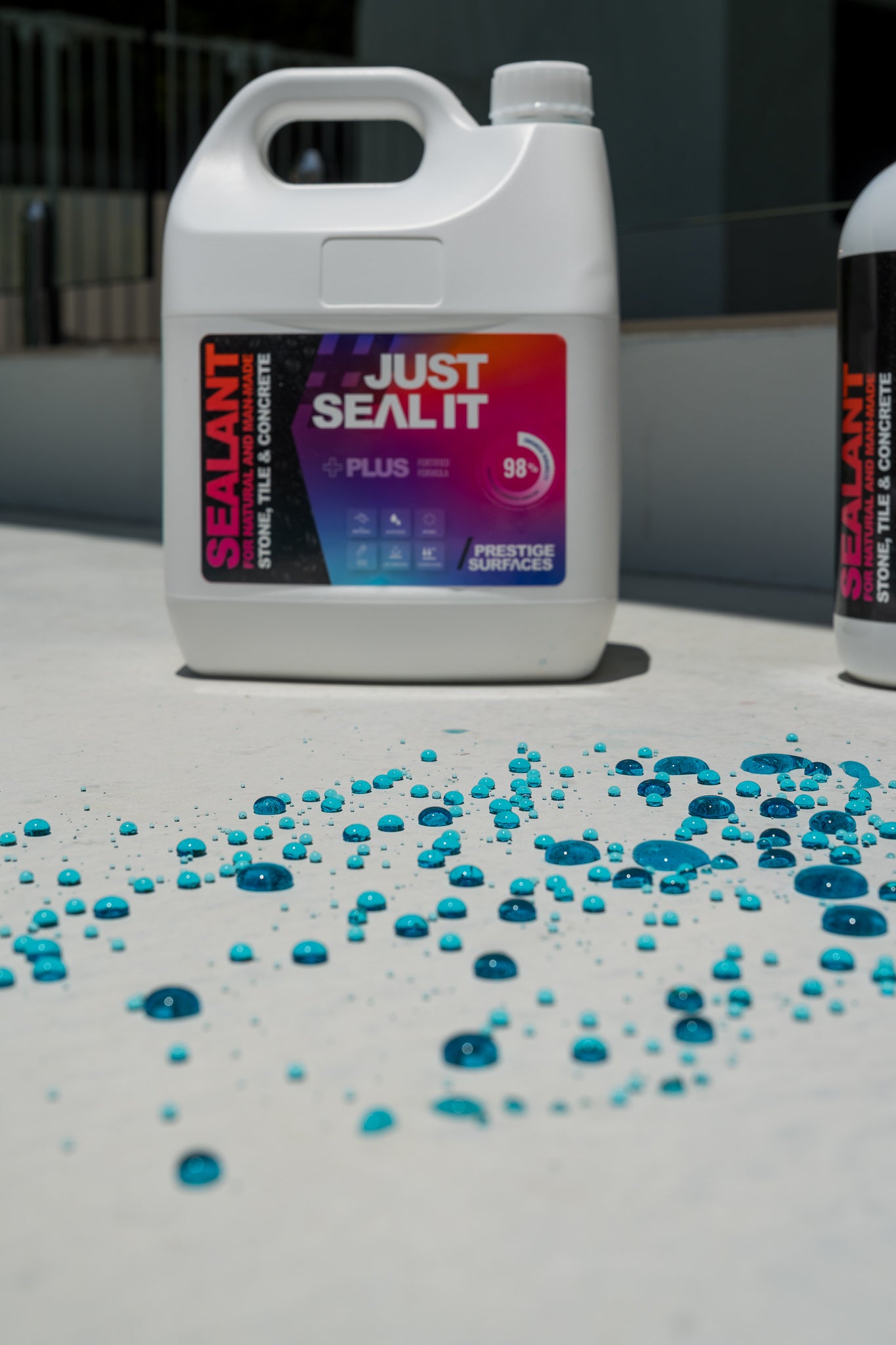
A penetrating sealer chemically bonds within the mineral structure of the concrete using modified silicone technologies. The pores don't close. Water just cannot wet the walls of those pores anymore. It moves across the surface instead of into it. The salt transport mechanism stops before it can start.
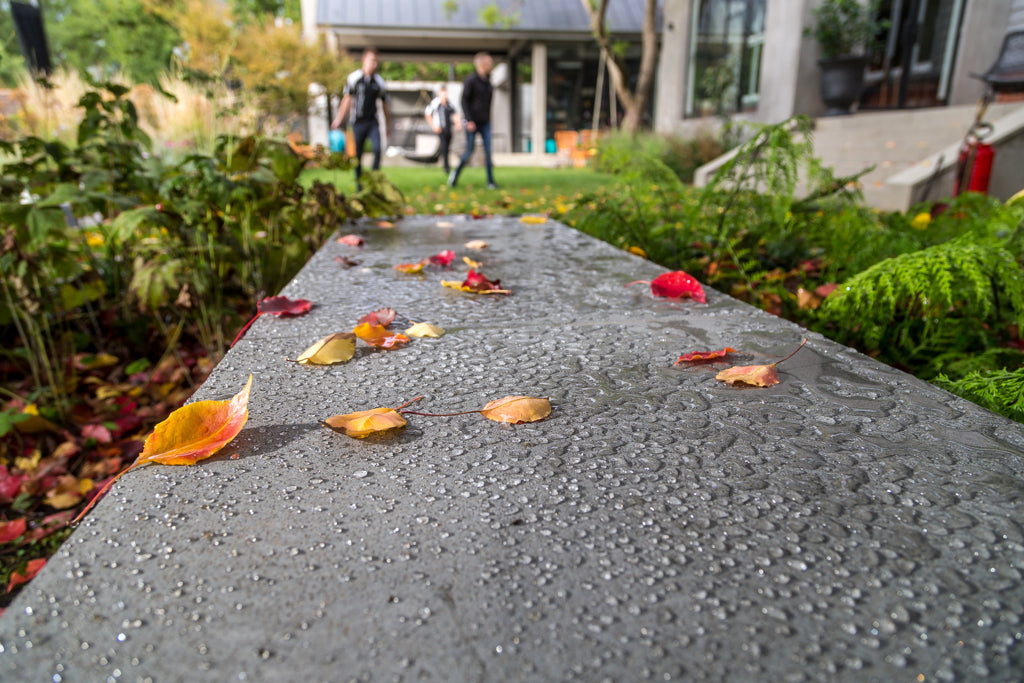
The surface looks the same after application. No film, no sheen, no colour change on standard concrete. The protection is below what you can see. That is the point. A topical sealer leaves a layer on top that weathers, peels, and eventually needs stripping. Unlike topical coatings, there is nothing sitting on the surface to peel, flake, or delaminate.
Independent laboratory testing shows the difference between sealed and unsealed surfaces clearly.
Not all concrete is the same

Concrete porosity varies significantly depending on mix, finish, and age. What works for a newly poured driveway is a different calculation from 15-year-old pool coping. Know what you're working with before you order product.
Standard concrete pavers and driveways are moderately porous. One coat of Classic Sealer is enough for most jobs. Coverage is 10m2 per litre (110 sq ft). Measure the area before ordering.
Pool surrounds are under constant chemical load: chlorine, salt-adjusted water, and sun year-round. Standard concrete pool coping benefits from a second coat, applied wet-on-wet while the first is still slightly tacky. The same logic applies at the 3-5 year maintenance mark. It's not a full reseal. It's a boost to a system that's largely intact.
Polished concrete is mechanically denser than standard concrete. A penetrating sealer will bond with the mineral matrix but won't absorb at the same rate as unpolished surfaces. It still protects. Polished concrete is not stain-proof. Test absorption in an inconspicuous area first and confirm the finish isn't affected before committing to the full surface.
Exposed aggregate has high surface area and absorbs more product per square metre. Allow for higher coverage and be thorough with buffing. Excess sealer left on textured surfaces is harder to remove than on smooth finishes.
Newly poured concrete needs a minimum of 28 days to cure before sealing. Sealing too early traps residual moisture in the slab. That causes problems that are harder to fix than waiting. The Cement Concrete and Aggregates Australia guidelines on concrete curing are worth reading if you're working with a fresh pour.
When not to seal concrete
There are situations where a penetrating sealer is the wrong tool.
Concrete with active moisture issues. If there's rising damp from below the slab, sealing the surface doesn't fix the source. It redirects moisture sideways or upward through unsealed paths. Address the drainage issue first. Then seal.
Concrete that hasn't cured. 28 days minimum for a standard mix. A slab poured last week needs to wait.
Structurally compromised concrete. A penetrating sealer protects sound material. It doesn't fill cracks, bond spalling sections, or repair carbonation damage. That remediation work comes first. Sealing over damaged concrete prevents the sealer from bonding fully with the mineral structure.
Painted or coated concrete. A penetrating sealer needs direct contact with the mineral substrate to bond. If the surface has been painted or previously coated with a topical product, the sealer has nothing to penetrate into. Strip the coating first.
If you're unsure whether your surface falls into any of these categories, send a photo to hello@justsealit.com.au with a description. We'll tell you straight.
How to prepare concrete for sealing
The sealer bonds with the mineral matrix. Anything sitting on the surface, including dirt, algae, efflorescence, or prior coating residue, blocks that contact. Preparation is the most important part of the job. Seal a dirty surface and you protect the dirt.
For most concrete, Stone Wash is the right cleaner. Dilute 1:100 with water, apply to the surface, agitate with a stiff brush, and rinse thoroughly. It lifts mineral deposits and grime without damaging the concrete.
If there's visible algae or lichen, treat with sodium hypochlorite first. Apply, allow it to dwell, rinse completely, then follow with Stone Wash to neutralise. Don't skip the neutralising step. Residual hypochlorite affects how the sealer cures.
Some concrete mixes have high calcium carbonate content. Avoid acid-based cleaners on those. They etch the surface. If you're not certain about the concrete composition, test a small area first or stay with Stone Wash, which is pH neutral and won't damage any standard concrete mix.
After cleaning, the surface must be bone dry before sealing. Bone dry means no visible moisture and no dark patches. In humid conditions that can take longer than it looks. Add an extra day in cooler or overcast weather. Don't rush this step. Applying sealer to a damp surface reduces bond strength and can trap moisture inside the slab.
Application temperature: 10-30 degrees C. Avoid sealing in direct sun on hot days. The sealer evaporates before it penetrates properly. Early morning is usually the better window.
See Penetrating Stone Sealer for independent laboratory test results on sealed versus unsealed surfaces.
How to apply a penetrating sealer to concrete
The application follows a wet-on-wet method. Concrete can absorb faster than stone, so work in manageable sections rather than flooding the entire surface at once.
What you need: a pump sprayer or paint roller, a clean lint-free cloth or microfibre pad for buffing, and enough product for the area. At 10m2 per litre, measure first. Running short mid-job means a seam in coverage that shows later.
- Apply the sealer evenly across the surface. Work in sections no larger than about 5m2 at a time.
- Let the surface absorb. Standard concrete draws the product in within a few minutes. Keep it looking wet during application and work continuously rather than letting sections dry before moving on.
- After 10 minutes, check for unabsorbed excess. Wet patches that haven't soaked in need to be buffed off with a cloth. Do not let excess sealer dry on the surface. It leaves a haze that is hard to remove.
- For highly porous or older concrete: apply a second coat while the first is still slightly tacky. Two coats wet-on-wet penetrates deeper than two coats applied separately with drying time between them.
- Allow light foot traffic after 1-2 hours once dry to the touch. Furniture after 24 hours. Vehicles off for 48 hours.
The full chemical cure takes 30 days. The surface is functional well before that, but avoid pressure washing or chemical cleaning in the first month. The application guide covers corners, steps, and vertical faces in more detail.
How long it lasts

When concrete is first sealed, it looks the same either way. Sealed or not. You won't notice a difference on day one.
The difference shows later.
Come back three to five years on and the surfaces that were sealed properly are still clean. Minimal staining. Still holding their character. The ones that weren't are showing efflorescence on the joints, dark water staining on the treads, and a surface that's harder to clean after every wet season. The concrete didn't fail. The protection wasn't there.
Once inside the concrete matrix, the chemistry holds. No surface film to degrade, crack, or strip. What changes slightly over time, with sustained UV and high traffic, is the peak hydrophobic performance at the surface. A maintenance coat every 3 to 5 years restores that. The substrate still carries the original chemistry. The top-up isn't starting from scratch. It's boosting a system that's largely intact.
Before resealing, check whether it's actually needed. The maintenance guide covers the full assessment: what to look for on concrete specifically, including staining re-emerging after rain, efflorescence returning on grout joints, or the surface looking harder to keep clean after wet weather.
Classic or Plus: which one for concrete
Two products. The choice is based on surface porosity.
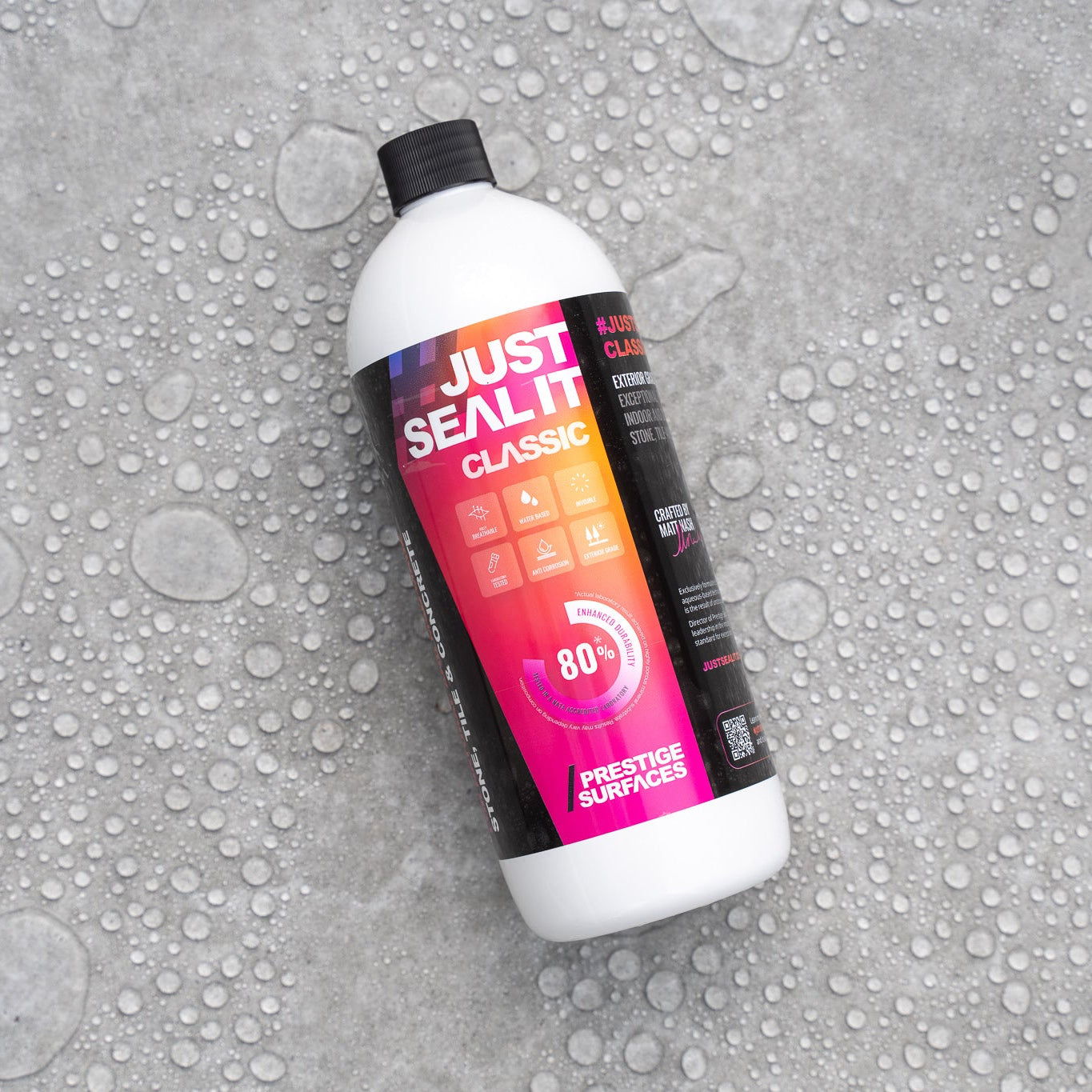
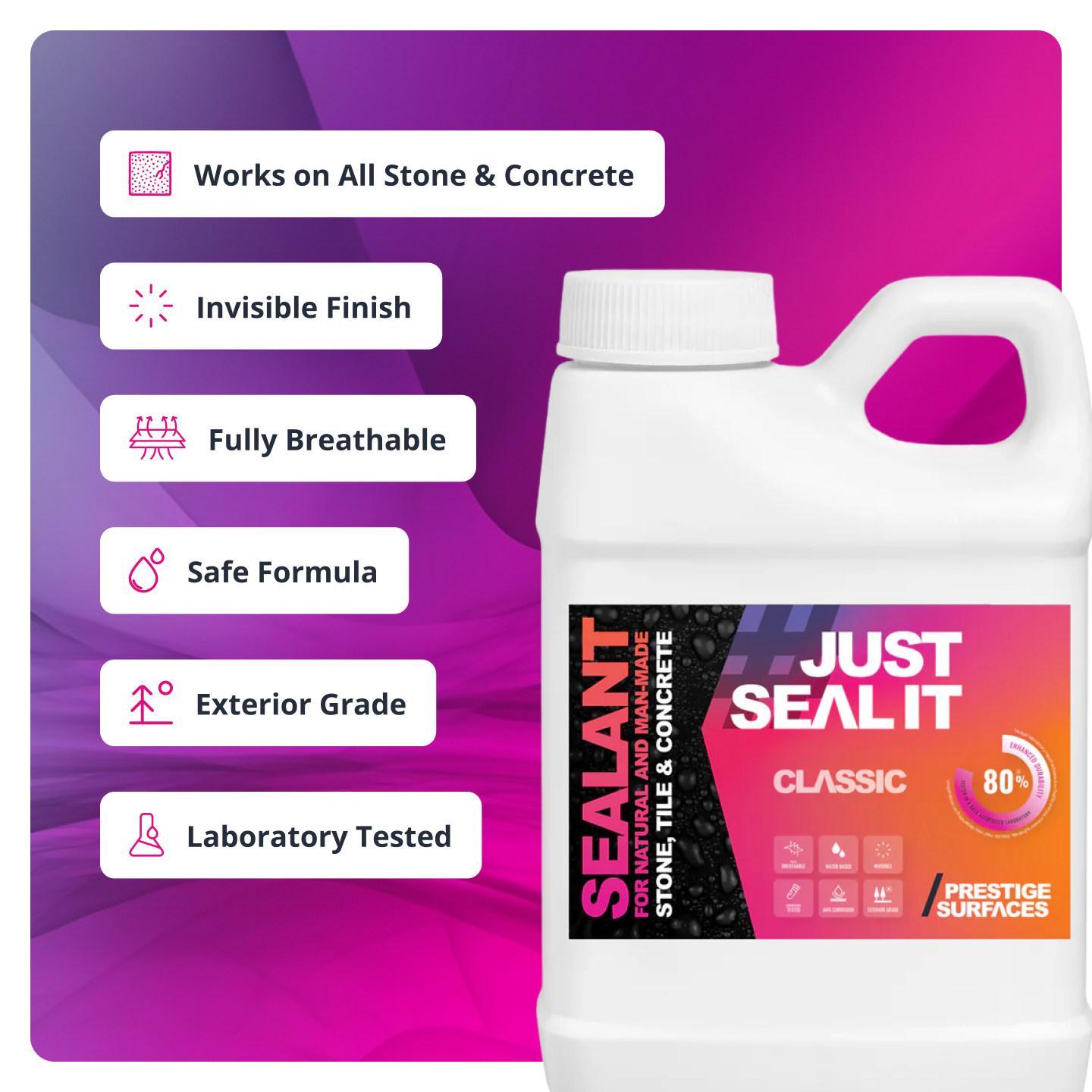
Classic Sealer is the right product for most concrete: standard pavers, driveways, pool surrounds, steps, and facades. Independently tested at a NATA-accredited laboratory. Coverage is 10m2 per litre. One coat on standard concrete. The NATA provides independent reference on this.
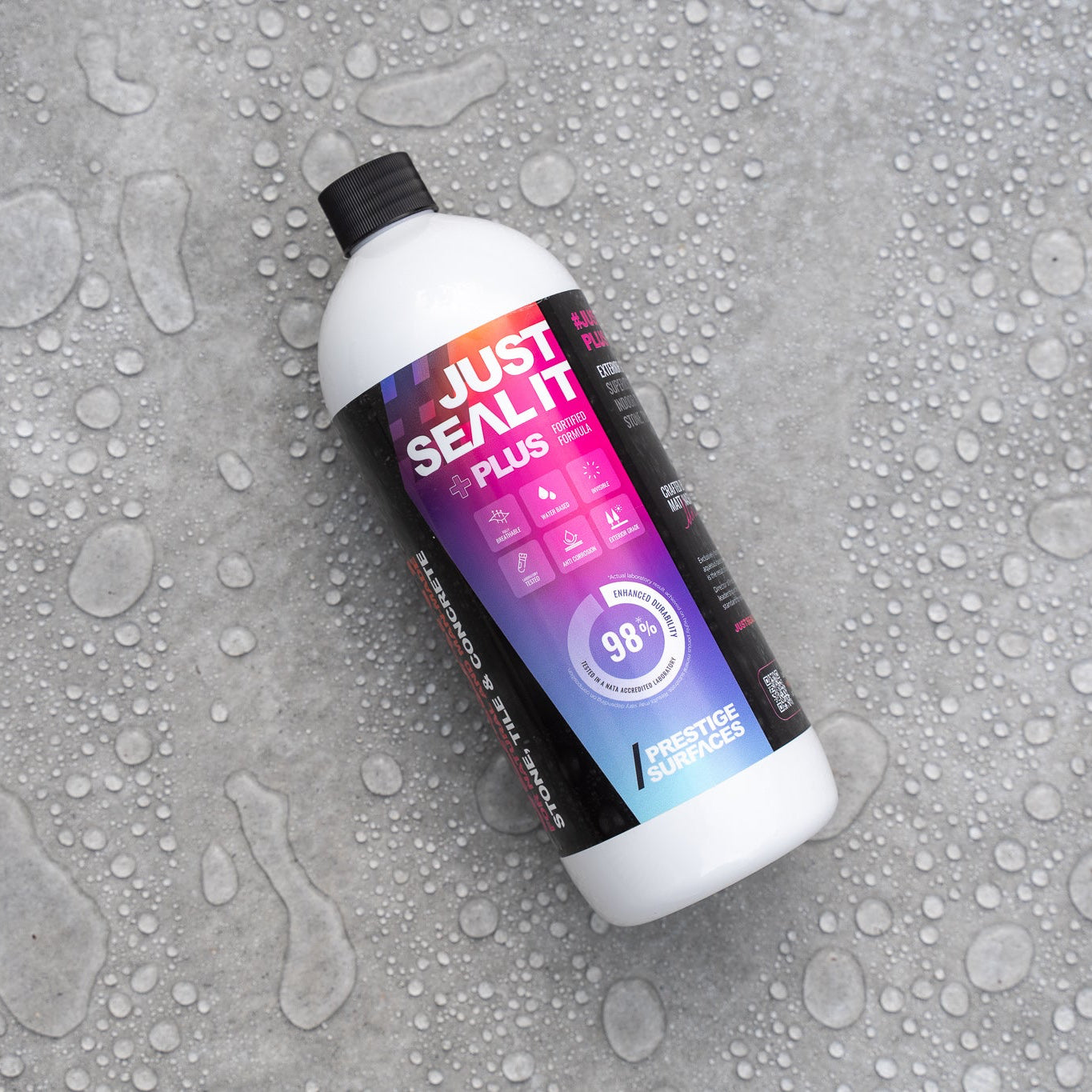
Plus Sealer is formulated for highly porous and older concrete where deeper penetration is needed. Independently tested at a NATA-accredited laboratory for salt, chemical, and weathering resistance on highly porous substrates. Use it for weathered concrete, aggregate driveways with deep voids, or surfaces that drink up the Classic and show dry patches within minutes.
A quick field test before ordering: pour a small amount of water on the concrete. If it absorbs in under 30 seconds and darkens significantly, you're working with a high-porosity substrate. Plus is the better call. If it sits for a minute or more before absorbing, Classic will do the job.
One point on water-based versus solvent-based: water-based has caught up. The old argument that solvents penetrate deeper is no longer accurate. Modern water-based formulas penetrate to 11mm in sandstone testing at a NATA-accredited laboratory. Both Just Seal It products are water-based, PFAS-free, and achieve those test results. If someone is selling a solvent-based sealer on penetration depth alone, the performance gap they're citing hasn't existed for years.
Full product details and compatible surfaces are on the Classic Sealer and Plus Sealer pages.
Frequently asked
What is a penetrating concrete sealer?
A penetrating concrete sealer soaks into the substrate and bonds with the mineral matrix inside the material. It creates a hydrophobic barrier below the surface without leaving a coating on top. The surface looks the same after application. Protection works from the inside out, stopping water and dissolved salts from entering the pore structure.
Does concrete need sealing?
Outdoor concrete is porous and exposed to water, mineral salts, UV, and traffic year-round. Unsealed, those elements degrade the surface over time: efflorescence, staining, and surface spalling are all signs of moisture cycling through unsealed concrete. Whether sealing is worth it depends on the surface and how much maintenance cost you're willing to absorb later. A penetrating sealer is considerably less expensive than resurfacing or replacement.
How do you apply penetrating sealer to concrete?
Apply to a clean, bone-dry surface between 10 degrees C and 30 degrees C using a pump sprayer or roller. Work in sections of around 5m2, keep the surface wet during application, then buff off any unabsorbed excess after 10 minutes. For highly porous concrete, apply a second coat while the first is still slightly tacky. Full steps are in the application guide.
How many coats does concrete sealer need?
One coat is enough for standard, moderately porous concrete. Highly porous or older concrete benefits from a second coat applied wet-on-wet while the first is still slightly tacky. Two coats applied this way penetrates deeper than two dry coats. The number of coats is driven by surface porosity, not by the size of the area.
How long does a penetrating concrete sealer last?
Once inside the concrete matrix, the chemistry holds. What diminishes slightly over time with UV and traffic is the peak hydrophobic performance. A maintenance coat every 3 to 5 years brings that back to optimal. Not starting from scratch. The original sealer is still in the substrate. The surface responds faster with less product than the first application required.
Can you use penetrating sealer on polished concrete?
Yes. Polished concrete is mechanically denser than standard concrete, so absorption is lower, but a penetrating sealer still bonds with the mineral matrix and protects against staining and moisture ingress. Test an inconspicuous area first to confirm absorption rate and that the finish isn't affected before committing to the full surface.
What is the difference between a penetrating sealer and a topical sealer on concrete?
A penetrating sealer soaks into the substrate and protects from within. No coating, no film, no visible change to the surface. A topical sealer sits on top, changes sheen and sometimes colour, and eventually weathers, peels, and needs periodic stripping. For outdoor concrete exposed to traffic and weather, a penetrating sealer is the more durable long-term option. See the guide to sealing exterior paving for a fuller comparison.
How do you know when concrete needs resealing?
For most surfaces, a maintenance coat every 3 to 5 years is the right interval. High-traffic surfaces and pool or coastal environments may need it closer to 3 years. If you're unsure, email us with a photo.
Still stuck? Get the right product

Not sure which sealer suits your concrete, how much you'll need, or whether the surface needs cleaning first: email hello@justsealit.com.au with a photo and we'll tell you. Most questions take five minutes to answer. We'd rather you get it right the first time than buy twice.