By Matt Nash, Founder, Just Seal It. 20+ years on-site. 15,000+ surfaces sealed. Featured on The Block. Published 28 April 2026.
Natural stone is porous. Left unsealed, it absorbs water and anything else that lands on it. The Natural Stone Institute provides independent reference on this.
The question is not whether to seal it. The question is which sealer to use and how to apply it so it actually works.
Short version: Clean the surface with Stone Wash diluted 1:100. Rinse and wait until bone dry. Apply Classic Sealer or Plus Sealer undiluted with a low-pressure sprayer or microfibre applicator. Two coats wet-on-wet: first coat left to right, second coat immediately in the opposite direction. Temperature between 10 and 30 degrees. Light foot traffic after 1 to 2 hours. Furniture and vehicles after 24 hours.
Do you actually need to seal natural stone?

Yes. The difference doesn't show at installation. It shows 3 to 5 years later.
When stone is first installed, it looks good either way. Sealed or not. You won't really notice a difference.
The difference shows later.
Fast forward 3 to 5 years: surfaces that were sealed properly clean up easily. Minimal staining. Still looking the way they did on installation day. The ones that weren't sealed usually don't come back the same. More staining. More wear. Problems that are harder and more expensive to fix.
That is the gap between a surface that degrades over time and one that does not.
The mechanism behind that degradation is straightforward. Water moving through unsealed stone carries dissolved mineral salts. As moisture evaporates at the surface, those salts crystallise inside the pore structure. The crystals expand and contract with temperature changes, forcing the capillary walls apart from within. Efflorescence is the visible sign. Staining and surface roughening follow.
If the surface is outdoors, the answer is not a close call. For indoor stone in bathrooms, kitchens, and entryways, the same logic applies. Natural stone in wet areas will absorb water and cleaning products over time. Leave it unsealed long enough and the discolouration becomes permanent. Independent laboratory testing through NATA-accredited facilities confirms that sealed stone shows significantly reduced absorption rates compared to unsealed controls.
Which sealer for which stone
Two products. The choice depends on the stone type and the conditions it's exposed to.
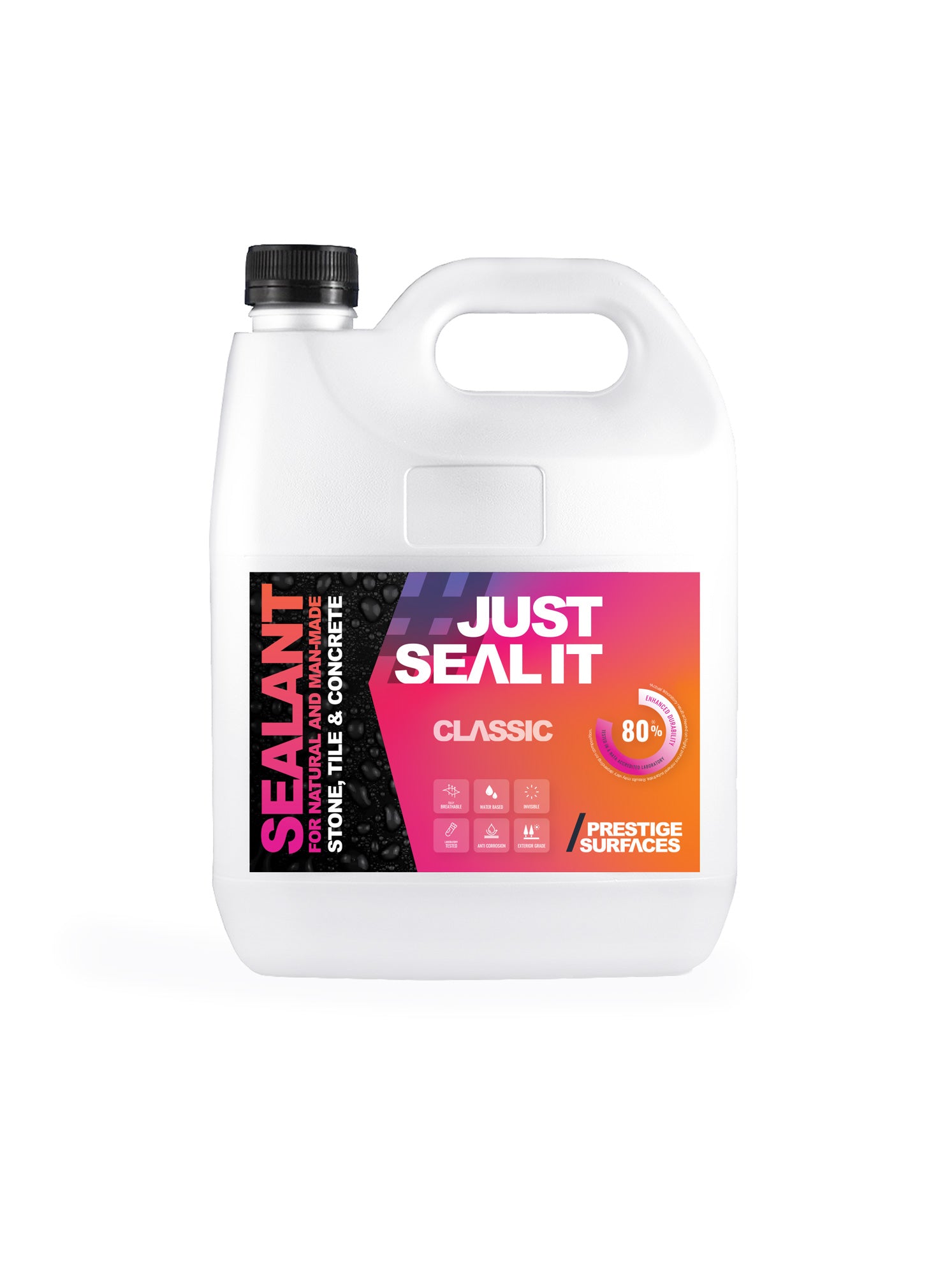
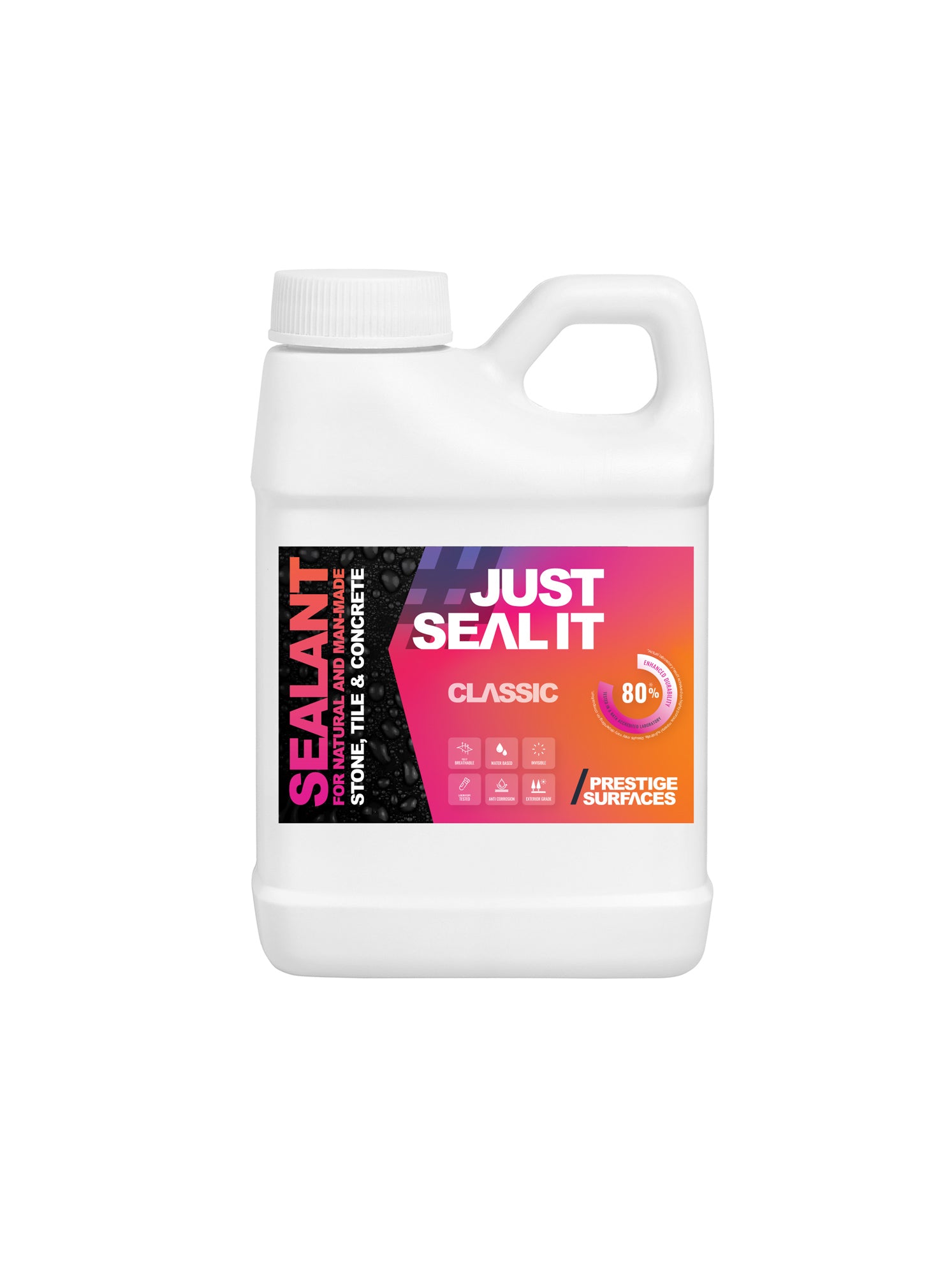
Classic Sealer is the right choice for most natural stone in standard conditions: sandstone, bluestone, granite, slate, limestone. Pool surrounds in temperate conditions. Interior stone. Water-based, PFAS-free, invisible finish.
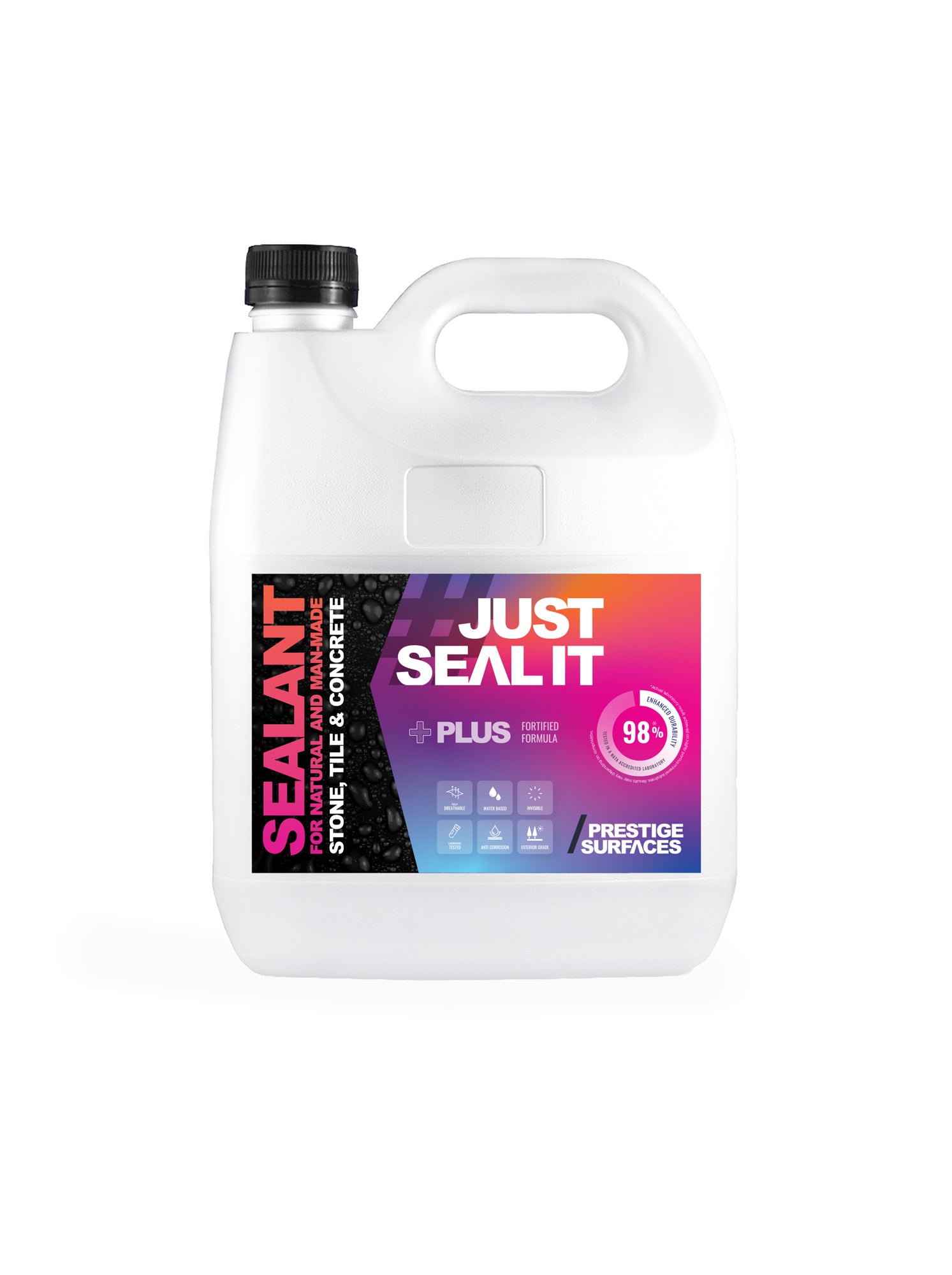
Plus Sealer is formulated for harder conditions: coastal properties with constant salt air, pools with high chemical exposure, stone in subtropical or tropical climates. Same invisible penetrating base, higher chemical and salt resistance.
Not sure which applies to your situation: see the sealants specification sheet or email us with a photo.
A note on limestone and travertine specifically: both contain calcium carbonate, which reacts with acid-based cleaners. Use only pH-neutral cleaners on these surfaces. Stone Wash is pH-neutral and safe on calcium carbonate stone.
How to clean natural stone before sealing
The surface must be clean and dry before any sealer goes down. Applying sealer over contamination prevents proper penetration. The result is patchy protection that won't last.
Clean with Stone Wash diluted 1:100 with water. Scrub with a stiff broom or apply with a low-pressure washer, then rinse thoroughly.
If the surface has visible algae, lichen, or biological growth: treat with sodium hypochlorite first. Let it dwell, rinse, then apply Stone Wash to neutralise before sealing. Residual hypochlorite interferes with sealer bonding. Do not skip the neutralisation step.
Once clean, the surface must be bone dry. Not surface-dry: dry through the full depth of the stone. On cooler or shaded surfaces, this takes longer than it looks. Seal on a dry day. If rain is coming, wait.
How to apply natural stone sealer

Apply undiluted. Two coats, wet-on-wet.
First coat left to right across the surface with a low-pressure sprayer or microfibre applicator. Apply the second coat immediately in the opposite direction while the first coat is still wet. Both coats penetrate as a single application.
Thin and even. Excess product left sitting on the surface won't penetrate deeper. It dries as a hazy residue. Coverage is one litre per 10m². Work at that rate.
Don't use a standard roller on textured or irregular stone. Rollers miss the low points on uneven surfaces. A pump sprayer or microfibre applicator gives more consistent coverage on rough, riven, or tumbled stone.
After application:
- Light foot traffic: 1 to 2 hours after dry to touch
- Furniture and vehicles: 24 hours
- Full cure, chemicals, pressure washing: 30 days
See the application guide for a full step-by-step walkthrough.
How long does natural stone sealer last?

A penetrating sealer chemically bonds within the mineral structure of the stone using modified silicone technologies. It does not expire on a fixed schedule.
The sealer is inside the stone, not on top of it. Unlike topical coatings, there is nothing sitting on the surface to peel, crack, or yellow. Protection continues as long as the bond holds.
For most outdoor stone, a maintenance coat every 3 to 5 years keeps protection at peak performance. High-use surfaces and coastal or pool environments may benefit from a maintenance coat closer to the 3-year mark. Low-traffic indoor stone may not need one for considerably longer.
When to reseal natural stone

For most surfaces, a maintenance coat every 3 to 5 years is the right interval. High-traffic surfaces and pool or coastal environments may benefit from one closer to 3 years. Low-traffic indoor stone may not need one for considerably longer.
Do not rely on visible water beading as an indicator. Beading reduces naturally over time as the surface weathers. That is normal behaviour, not a sign the sealer has failed. Protection continues from inside the stone regardless of what the surface looks like. The maintenance guide has a full checklist for when resealing is worth doing.
Frequently asked
Does all natural stone need sealing?
Most natural stone is porous enough to benefit from sealing. Some very dense stones, certain granites, absorb moisture more slowly, but even these are vulnerable at cut edges and grout joints. For outdoor use, sealing is always the right approach.
Can you seal natural stone yourself?
Yes. Clean the surface, let it dry completely, and apply two coats wet-on-wet with a low-pressure sprayer or microfibre applicator. The most common mistakes are sealing over a dirty surface or sealing before the stone is fully dry.
What happens if you seal natural stone when it's still wet?
The sealer cannot penetrate properly. It will sit on the surface rather than bonding with the stone. You'll get hazy patches and short-lived protection. Wait until the stone is bone dry throughout, not just dry at the surface.
Can you seal natural stone around a pool?
Yes. Pool surrounds need sealing more than most surfaces. Constant exposure to chlorine, salt, UV, and wet-dry cycling is hard on stone. Use Plus Sealer on pool coping and surround paving.
Does sealing change the look of natural stone?
A penetrating sealer applied correctly is invisible. It does not change the colour, sheen, or texture of the stone. If the surface looks wet or coated after application, excess sealer was applied or the wrong product type was used.
Do you seal grout at the same time?
Yes. Grout is porous and should be sealed along with the stone surface. A penetrating sealer applied to the tiles will also penetrate into the grout joints. On outdoor paving exposed to heavy weather, a dedicated grout sealer may be worth applying separately.
Can you seal limestone and travertine the same way?
Yes, with one important note: do not use acid-based cleaners on limestone or travertine before sealing. Both contain calcium carbonate, which reacts with acid and damages the stone surface. Stone Wash is pH-neutral and safe on both.
How do you know when the sealer has worn off?
For most surfaces, a maintenance coat every 3 to 5 years is the right interval. High-traffic surfaces and pool or coastal environments may need it closer to 3 years. If you're unsure, email us with a photo.
Still stuck? Get the right product

Not sure which sealer suits your surface, how much you'll need, or whether your surface needs cleaning first: email hello@justsealit.com.au with a photo and we'll tell you. Most questions take five minutes to answer. We'd rather you get it right the first time than buy twice.