By Matt Nash, Founder, Just Seal It. 20+ years on-site. 15,000+ surfaces sealed. Featured on The Block. Published 11 May 2026.
Every porous surface outdoors is under constant attack. Water, mineral salts, UV, and traffic work on the substrate continuously. A penetrating sealer changes the outcome.
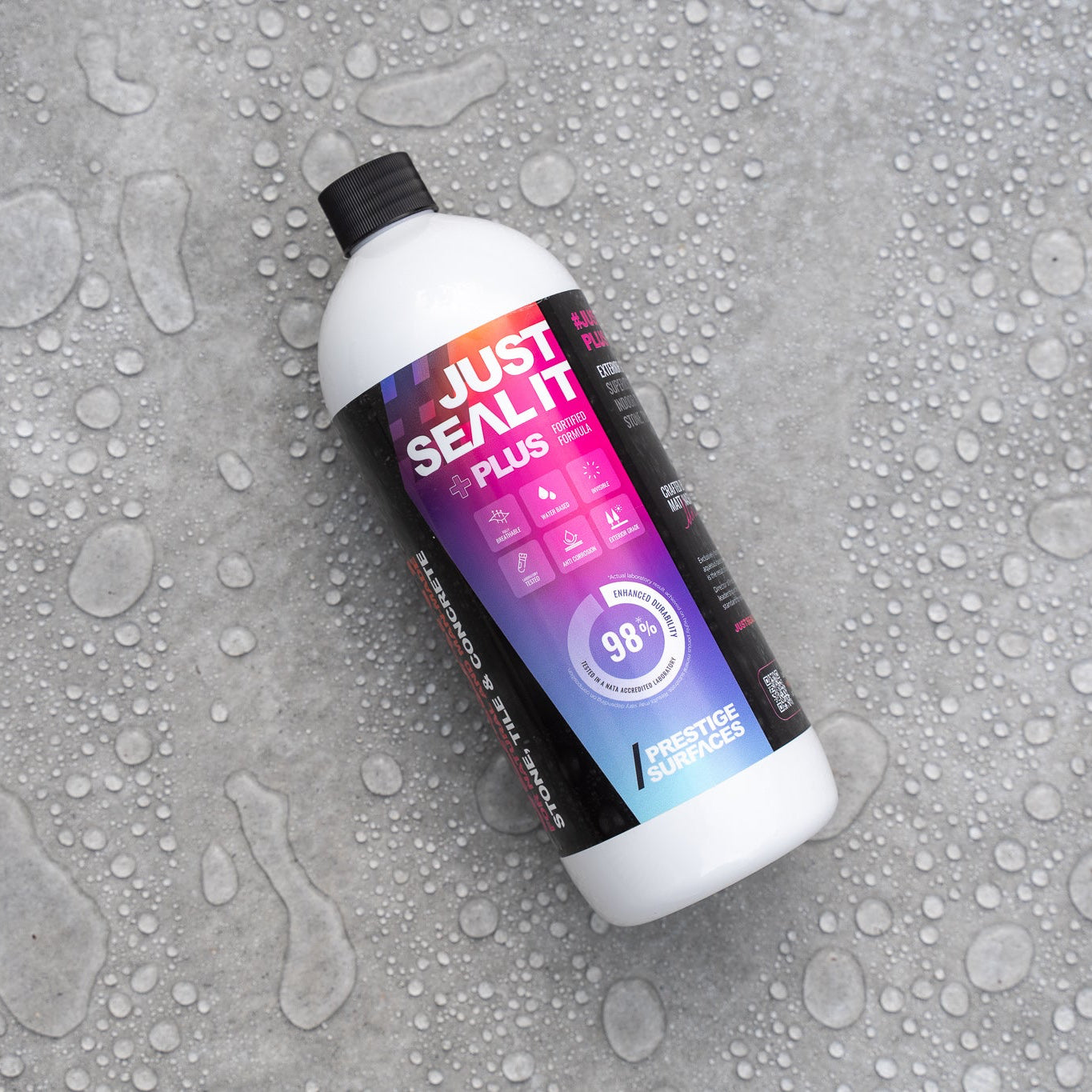
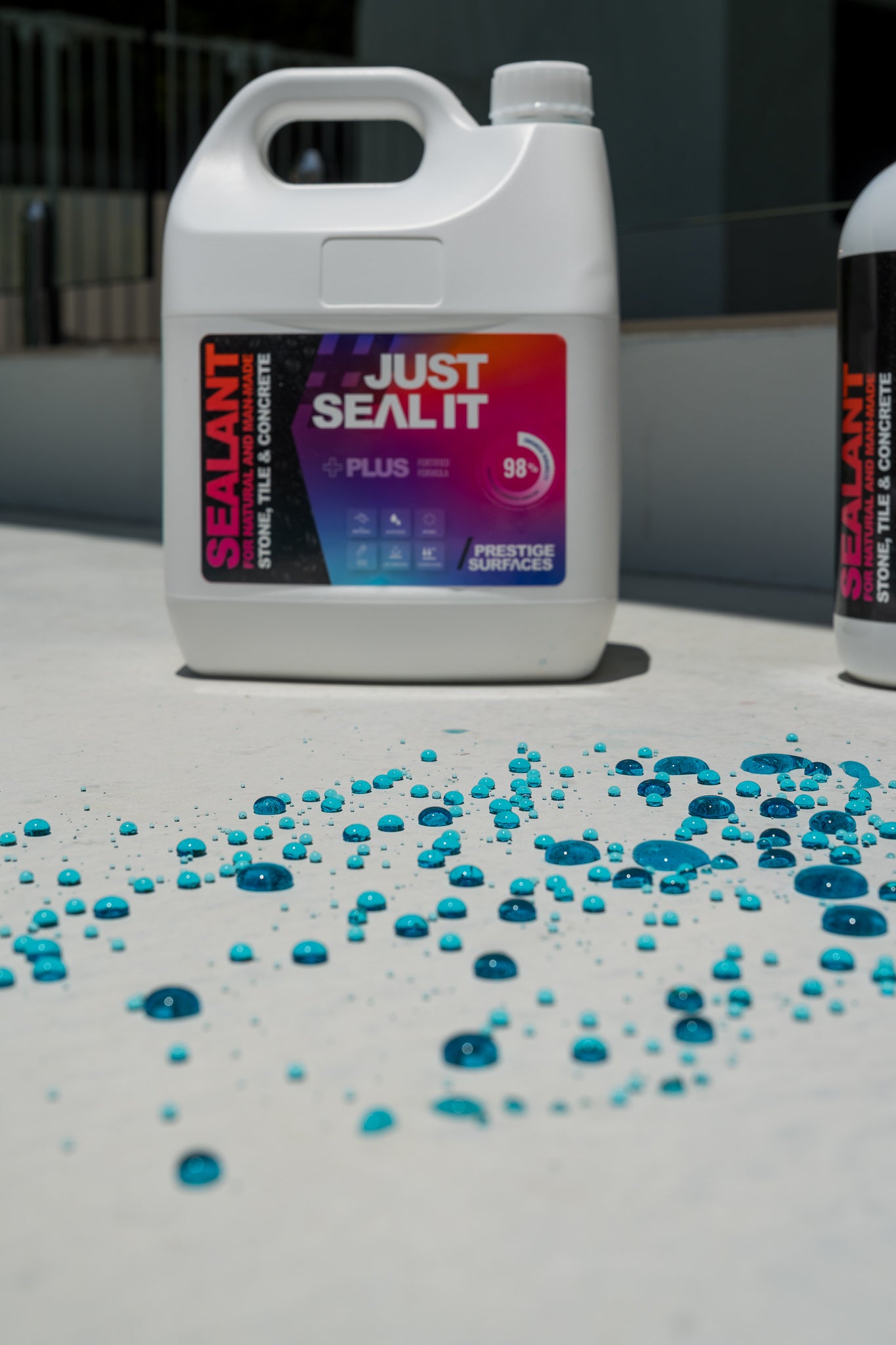
It doesn't coat the surface. It becomes part of it. The product soaks into the substrate, bonds with the mineral matrix, and creates a hydrophobic barrier below what you can see. No film. Nothing to peel, lift, or reapply.
It's also called an impregnating sealer. Same product, different name. If you searched for one hoping to find the other, you've found both.
Short version: Apply a penetrating sealer to any porous surface (natural stone, concrete, tile, grout, brick, or facade) and it soaks in, bonds with the mineral matrix, and creates a hydrophobic barrier below the surface. No film. Nothing to peel or yellow. Classic Sealer and Plus Sealer bond with the mineral matrix below the surface. A maintenance coat every 3 to 5 years brings the hydrophobic performance back to optimal. One coat is usually enough. Apply to a clean, bone-dry surface between 10°C and 30°C, buff off any excess after 10 to 15 minutes, and you're done.
How a penetrating sealer works

Every porous surface has a network of microscopic pores, channels, and gaps. Left open, those pores absorb water, dirt, and mineral salts. Sealed with a penetrating impregnating sealer, the compound chemically bonds within the mineral structure using modified silicone technologies.
The sealer becomes part of the material rather than coating the surface. Protection forms from inside the pore structure: invisible, with no change to the surface appearance.
In independent testing at a NATA-accredited laboratory, the sealer penetrated 11mm into sandstone. That's not a surface coating. That's protection at depth.
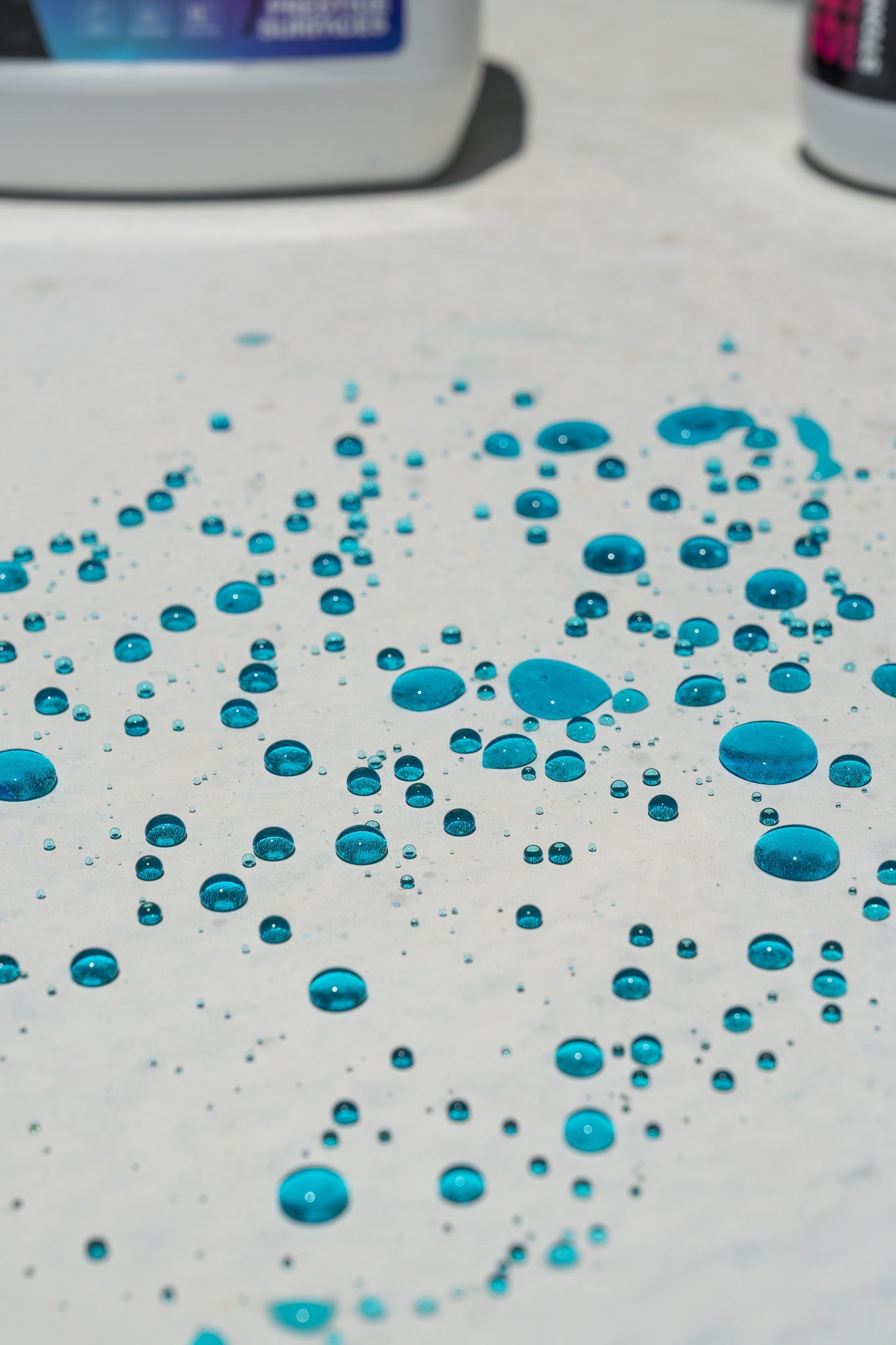
After application, water initially beads on the surface. That visible effect reduces over weeks and months as the sealer cures fully into the substrate. This is normal and expected. The protection works internally regardless of what you see at the surface. A sealed surface that no longer shows visible beading is still protected. The barrier is below the surface, not on it.
Penetrating vs topical: why one lasts and one doesn't
A topical sealer forms a film on top of the surface. Early on, it looks like protection. For a while, it is.
Then moisture gets underneath the film. It has nowhere to go. Thermal cycling, UV, and moisture pressure cause the film to lift, crack, and separate. On natural stone and outdoor surfaces, this usually happens faster than expected.
Penetrating sealers don't work this way. They become part of the substrate. There is no film to peel. No layer to trap moisture. The surface breathes, water moves normally, and the material behaves the way it was designed to.
There is no long-term situation where a topical film sealer is the better choice on natural stone or exterior paving. A penetrating impregnating sealer is the right product for porous surfaces.
Efflorescence, corrosion, and salt attack

That's what unsealed exterior paving looks like after a few seasons. Not a structural failure, but it's not cosmetic either. It's the surface telling you what's been happening below it.
Outdoor surfaces are under constant pressure from the elements. Water gets in. It carries dissolved mineral salts with it. When it evaporates at the face, those salts crystallise. That's efflorescence: the white, chalky deposits that appear on tiled areas, pavers, brickwork, and rendered walls after wet weather. In the early stages it wipes off. After repeated moisture cycling, the salt crystals can expand with enough force to cause spalling and surface damage.
Salt corrosion is the next stage. Chloride and sulfate salts penetrate porous materials and cause breakdown from within. Pool surrounds are particularly exposed: chlorine, salt-adjusted water, and sun work on the substrate year-round. Coastal properties get the same treatment from airborne salt. The material doesn't fail suddenly. It degrades slowly, then noticeably.
Calcification follows in hard-water areas. Mineral-rich water leaves calcium deposits on the surface that bond over time into a scale that's harder to remove than the original staining underneath it.
A penetrating impregnating sealer stops the mechanism. The hydrophobic barrier below the surface means water moves across rather than in. Minerals stay out. The surface behaves the way it was designed to, not the way exposure has trained it to.
In independent testing at a NATA-accredited laboratory, unsealed samples lost 6.7% of their mass over the test period. Sealed samples lost 0.1%. That gap represents years of efflorescence, corrosion, and calcification that didn't happen.
Most sealers contain PFAS. Ours don't.
PFAS stands for per- and polyfluoroalkyl substances. They are added to many sealers to create water repellency. They are also persistent. They don't break down in the environment or in the body, and most regulatory bodies globally are moving to restrict or phase them out.
A large portion of the penetrating sealer market still uses them.
Matt Nash founded Just Seal It because he didn't want to expose himself or his team to chemicals that were detrimental to health and the environment. Twenty years of specialising in exterior surfaces, from coastal environments to pool surrounds to major commercial sites, gave him a clear brief: the products had to hold up, and they had to be safe to work with. Most of what was available didn't meet both criteria. Either the chemistry was wrong, the durability wasn't there, or the application experience involved solvents and VOCs that made a full day on-site genuinely unpleasant.
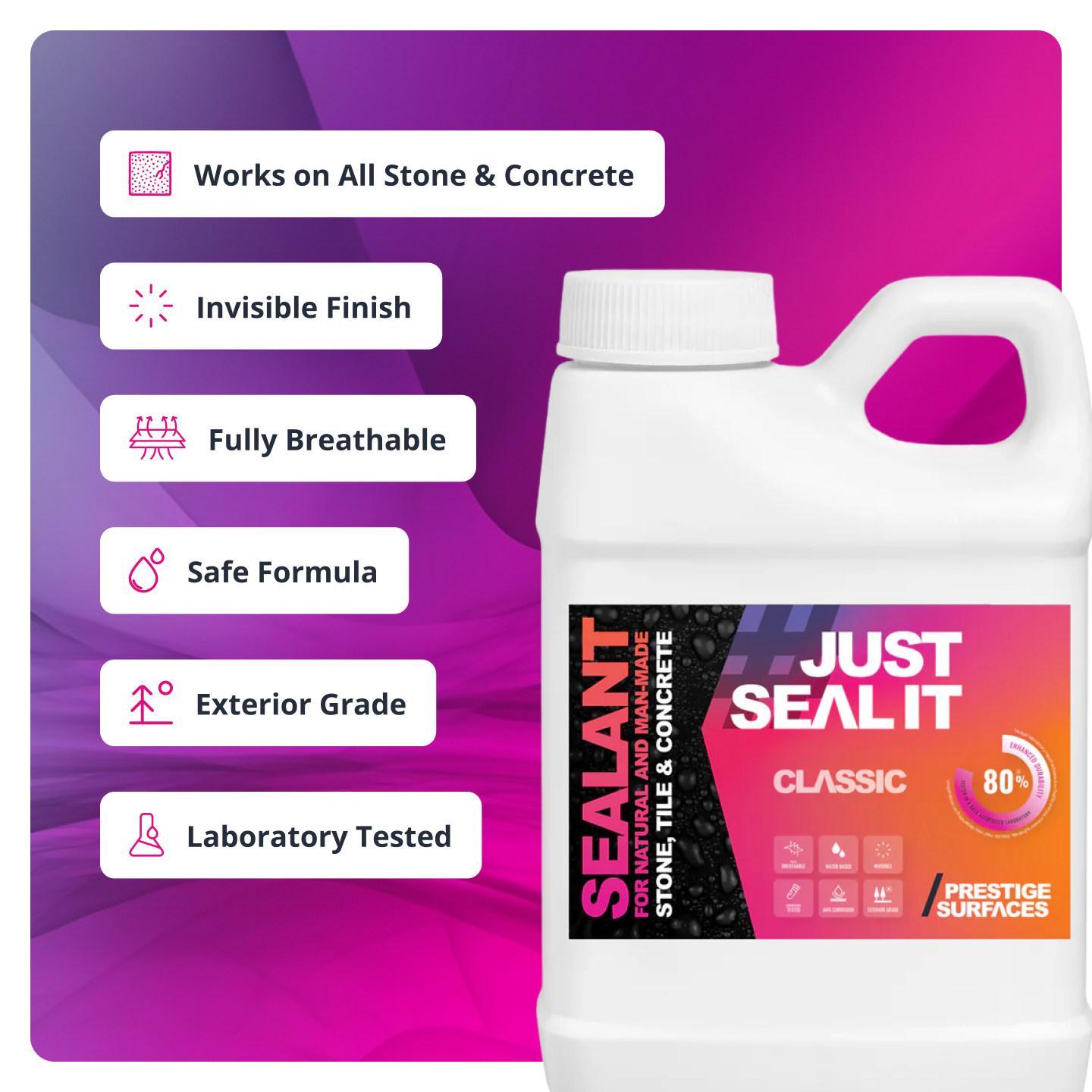
The result is a range built on modified silicone technologies. No PFAS, no solvents, no VOCs. Minimal smell during application. Verified performance at a NATA-accredited laboratory that exceeds standard market alternatives.
PFAS-free should be the baseline. It's not a premium add-on. Just Seal It was formulated this way from the start, ahead of where the industry is heading by a decade. For more on PFAS and health, PFAS safety information from health authorities is worth reading.
Which surfaces need a penetrating sealer
Any porous surface benefits. The question is which product and how often, not whether to seal.
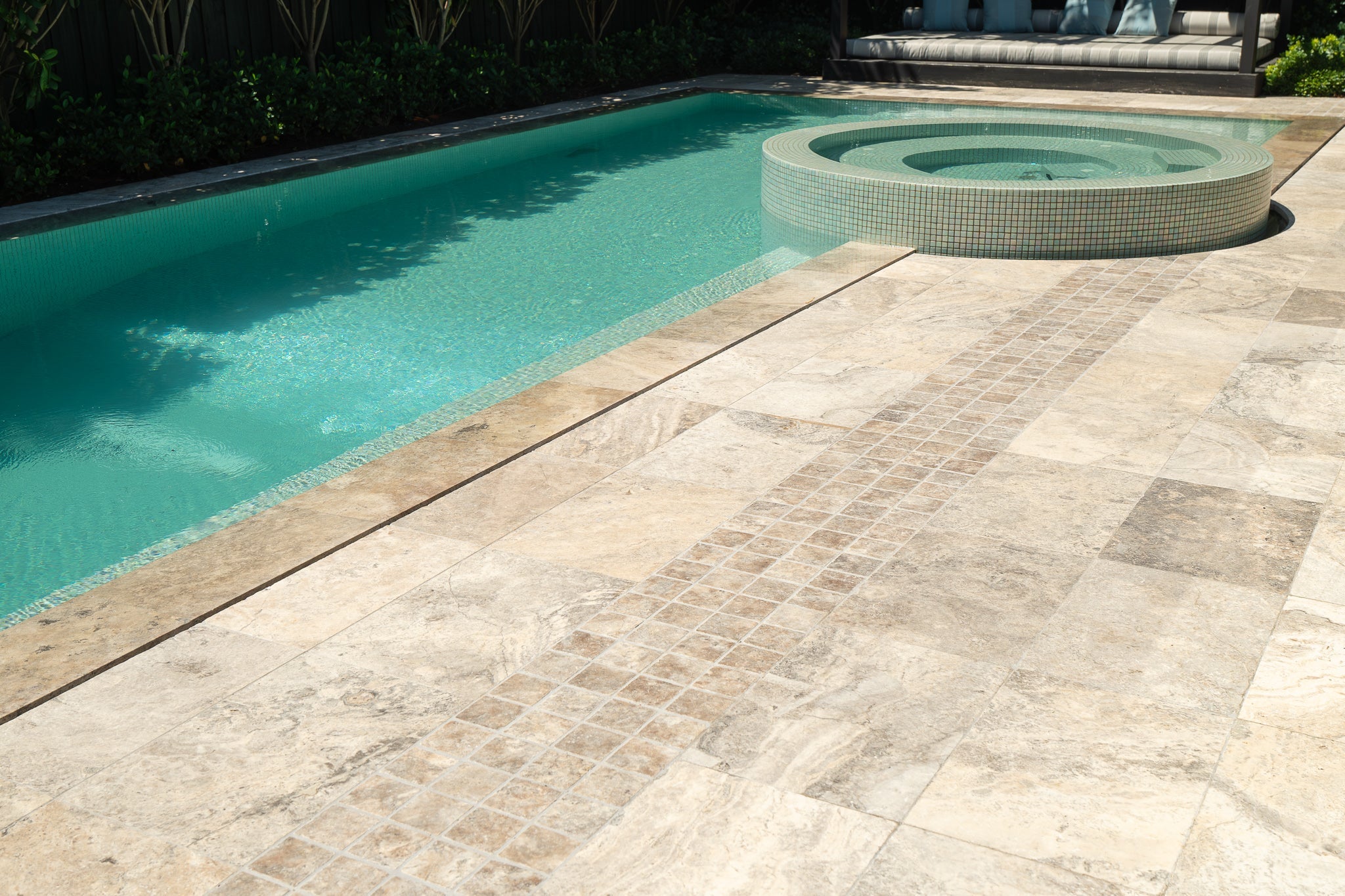
Natural stone. Sandstone, travertine, limestone, marble, bluestone, granite, slate. All have some porosity. The highly porous stones (sandstone, travertine, limestone) need the Plus formula. For the full case for sealing exterior stone, see why sealing exterior paving matters.
Concrete and concrete pavers. High-exposure, high-traffic surfaces that benefit significantly from a penetrating sealer. Slower weathering, reduced staining, less efflorescence in grout joints. Cement Concrete and Aggregates Australia recommends penetrating sealers as the standard approach for exterior concrete surface protection.
Terracotta and unglazed tiles. Porous by nature and typically used in outdoor or semi-outdoor settings. One of the highest-benefit sealing applications.
Grout. Always seal the grout. Even where the tiles themselves are glazed porcelain (non-porous), the grout joints are porous. They stain, discolour, and deteriorate without protection. Sealing the tile face is unnecessary on glazed porcelain. Sealing the grout is not.
Facades and rendered surfaces. External walls take UV, rain, and salt spray over years. A penetrating impregnating sealer protects without changing the surface appearance or trapping moisture inside the wall system.
Brick. Unsealed brick absorbs water and mineral salts. Efflorescence on brick faces (white crystalline deposits) is a direct result of moisture moving through an unsealed surface. A penetrating sealer stops the mechanism.
One exception: glazed or vitrified tile faces (polished porcelain, glazed ceramic). These are already non-porous. A penetrating sealer has nothing to bond with on the tile face. You don't need it there. Seal the grout.
Classic or Plus: how to choose

Two products. The choice comes down to how porous the surface is.
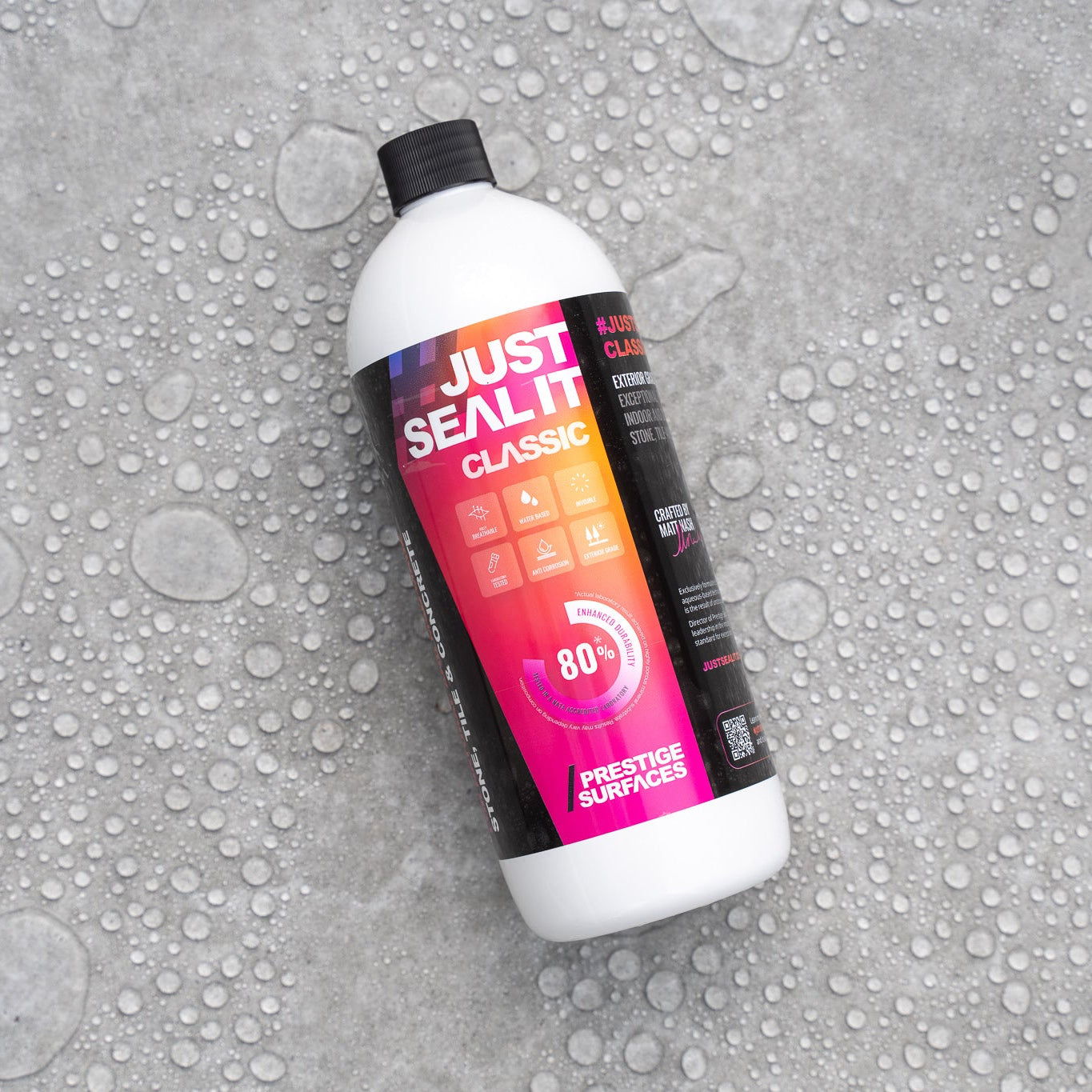
Classic Sealer suits standard-porosity surfaces: bluestone, granite, polished concrete, most exterior paving, brick, and grout. Tested at up to 80% enhanced durability at a NATA-accredited laboratory.
Plus Sealer suits highly porous surfaces: sandstone, travertine, limestone, aged concrete, pool coping, and rendered facades. Engineered for demanding environments: coastal properties, pool surrounds, sustained UV and weather exposure. Tested at up to 98% enhanced durability on highly porous mineral substrates at a NATA-accredited laboratory.
If you're unsure, choose Plus. Applying a higher-performance product to a lower-porosity surface causes no problems. The wrong product on a highly porous surface means the protection is undersold.
Both products are available in 4L, 12L, and 20L formats for larger projects. The same formulas have been applied at Melbourne International Airport and the Victoria Comprehensive Cancer Centre. These are environments where performance has to hold over years, at scale, without failure.
How to apply a penetrating sealer

Full detail is in the application guide. The short version:
Step 1: Clean the surface. Use Stone Wash diluted 1:100 with water. If there is visible algae, lichen, or biological growth, apply sodium hypochlorite first, rinse thoroughly, then use Stone Wash to neutralise before rinsing again. Note: limestone, travertine, and marble contain calcium carbonate and are sensitive to acid. Avoid acid-based cleaners on these surfaces.
Step 2: Let it dry completely. The surface must be bone dry before sealing. That's not a fixed number of hours. It depends on temperature, humidity, and the material. In full sun and dry conditions, 24 hours is typically sufficient. In cooler or humid conditions, wait longer.
Step 3: Apply the sealer. Work at 10°C to 30°C. Apply by roller, brush, or pump sprayer. Apply generously and evenly. Let the sealer absorb for 10 to 15 minutes, then buff off any excess. Work in manageable sections.
Step 4: Allow to cure. Light foot traffic after the surface is dry to touch, typically 1 to 2 hours. Furniture placement after 24 hours. Full resistance to chemicals and pressure washing after 30 days.
One coat is sufficient for most surfaces. On highly porous surfaces (sandstone, travertine, aged concrete), apply a second coat while the first is still tacky, within 10 to 15 minutes of the first application. This gives deeper penetration on materials that absorb quickly.
How long it lasts and when to reseal
When a surface is first sealed, it doesn't look any different. The sealer is invisible. You won't notice it on day one.
The difference shows up later.
Three to five years on, surfaces that were sealed properly clean up easily. No embedded staining. No efflorescence. No deteriorating grout joints. The ones that weren't sealed usually look different in a way that's harder and more expensive to address.
Classic Sealer and Plus Sealer bond with the mineral matrix below the surface. What diminishes slightly over time, with UV and heavy traffic, is the peak hydrophobic performance at the surface.
A maintenance coat every 3 to 5 years brings that performance back to optimal. Not starting from scratch. Boosting a system that's largely intact. The surface responds faster and requires less product than the original application.
Just Seal It sealers never flake, yellow, or peel. If you're seeing any of that on a previously sealed surface, the prior treatment was a topical product. Penetrating sealers don't behave that way.
Before resealing, check whether it's actually needed. The best indicators are time since last application and surface condition: staining re-emerging, efflorescence returning on grout joints, or the surface looking harder to clean after wet weather. The maintenance guide covers the full assessment.
Frequently asked
What is the difference between a penetrating sealer and an impregnating sealer?
Nothing. They are the same product described two ways. Penetrating refers to how the sealer works: it soaks into the substrate. Impregnating refers to what it does: it fills the pores. Both terms describe a sealer that protects from below rather than sitting on top of the surface.
Does porcelain need sealing?
It depends on the finish. Unglazed and textured porcelain is porous and benefits directly from sealing. Fully glazed porcelain tile faces are non-porous, so a penetrating sealer won't bond with the tile itself. But the grout joints between any porcelain tiles are porous regardless of tile finish. Always seal the grout. On pool surrounds, outdoor terraces, and facades, the grout is where moisture enters and damage starts.
How long does a penetrating sealer last?
Classic Sealer and Plus Sealer bond with the mineral matrix below the surface. What diminishes slightly over time, with UV and heavy traffic, is the peak hydrophobic performance. A maintenance coat every 3 to 5 years brings that back to optimal. Not starting from scratch. Boosting a system that's largely intact.
Does a penetrating sealer change the look of the surface?
No. A correctly applied penetrating sealer is invisible. The surface looks exactly as it did before sealing. If the surface looks wet, shiny, or coated after application, either too much product was applied and not buffed off, or a topical product was used instead. Penetrating sealers do not alter colour or sheen.
How do I know if my surface needs resealing?
For most surfaces, a maintenance coat every 3 to 5 years is the right interval. High-traffic surfaces and pool or coastal environments may need it closer to 3 years. If you're unsure, email us with a photo.
Is a penetrating sealer safe around people and pets?
Just Seal It penetrating sealers are water-based, PFAS-free, and contain no solvents or VOCs. Once dry, typically 1 to 2 hours, the sealed surface is safe for foot traffic, children, and pets. During application, standard ventilation is recommended and direct skin contact should be avoided.
How many coats does a penetrating sealer need?
One coat is sufficient for most surfaces. On highly porous surfaces such as sandstone, travertine, and aged concrete, apply a second coat while the first is still tacky, within 10 to 15 minutes of the first application. This gives deeper penetration on materials that absorb quickly.
What happens to an unsealed porous surface over time?
Water, mineral salts, and contaminants absorb into the surface. Efflorescence appears as mineral salts are pulled to the surface by moisture cycling. Grout joints stain and deteriorate. Natural stone develops surface etching and embedded staining. The damage compounds. Surfaces not sealed in the first year or two are noticeably harder to restore than ones that were protected from the start.
Still stuck? Get the right product

Not sure which sealer suits your surface, how much you'll need, or whether your surface needs cleaning first: email hello@justsealit.com.au with a photo and we'll tell you. Most questions take five minutes to answer. We'd rather you get it right the first time than buy twice.