By Matt Nash, Founder, Just Seal It. 20+ years on-site. 15,000+ surfaces sealed. Featured on The Block. Published 5 May 2026.
Grout is the porous cement mortar filling the joints between tiles, pavers, and stone. Whatever surface surrounds it, the grout joint itself absorbs everything. A grout sealer blocks those pores before coffee, wine, body products, or outdoor moisture get in and make themselves permanent.
Most grout sealers from hardware stores don't last two years. The ones that work are penetrating sealers that soak into the grout and block moisture at the pore level. Short version: for most indoor grout, Classic Sealer handles the job. For outdoor grout exposed to weather, pool chemicals, or coastal air, Plus Sealer is the better fit. Clean first with Stone Wash diluted 1:100, make sure the surface is bone dry, then apply two coats wet-on-wet across the full surface.
Why grout stains when the surface around it doesn't

Tiles, pavers, and natural stone vary widely in porosity. But in most tiled or paved surfaces, the surrounding material is denser and less absorbent than the grout joint. The joint is cement-based mineral mortar. Porous by nature, and porous by design, because some water vapour movement is intentional in the tile system.
That porosity is the problem. Every spill that gets into the grout changes the internal chemistry of the joint. Staining compounds coat the mineral particles. Coloured liquids bond to the pore surfaces. The grout darkens, stains, and becomes harder to clean over time. Once staining is established, normal cleaning removes the surface layer but not what has bonded deeper in the pore structure.
The difference between sealed and unsealed grout isn't visible on day one. It shows up 18 months in.
In testing at a NATA-accredited laboratory, sealed natural stone samples lost 0.1% of their mass versus 6.7% for unsealed. That up to 98% difference in material loss is what separates grout that holds its appearance from grout that doesn't.
Efflorescence: what it does to exterior grout
Efflorescence is what happens when water moves through porous grout, dissolves soluble salts from the cement binder, carries them to the surface, and then evaporates. The salts are left behind as a white powdery deposit on the face of the joint.
On interior grout, efflorescence is mostly cosmetic. On exterior grout: patios, pool surrounds, and outdoor tiling, it is a structural problem. When salt crystals form inside the pore structure rather than on the surface, they expand as they crystallise. That expansion generates pressure inside the joint. Over repeated wet-dry cycles, that pressure causes micro-cracking. The cracks allow more water in. More salts dissolve and move. The cracking progresses. The joint spalls.
Unsealed exterior grout in exposed conditions can deteriorate within 2-3 years. This is the most under-appreciated reason to seal outdoor tile grout. Most people think about staining. The structural degradation from moisture-driven salt cycling matters more.
Sealing cuts the water pathway. If water can't move through the grout, it can't carry dissolved salts to the surface or into the pore walls. The same logic applies to thermal cycling, where surface temperatures can swing 40 degrees C or more in a day. Sealed grout resists moisture-driven cracking because the pores are blocked.
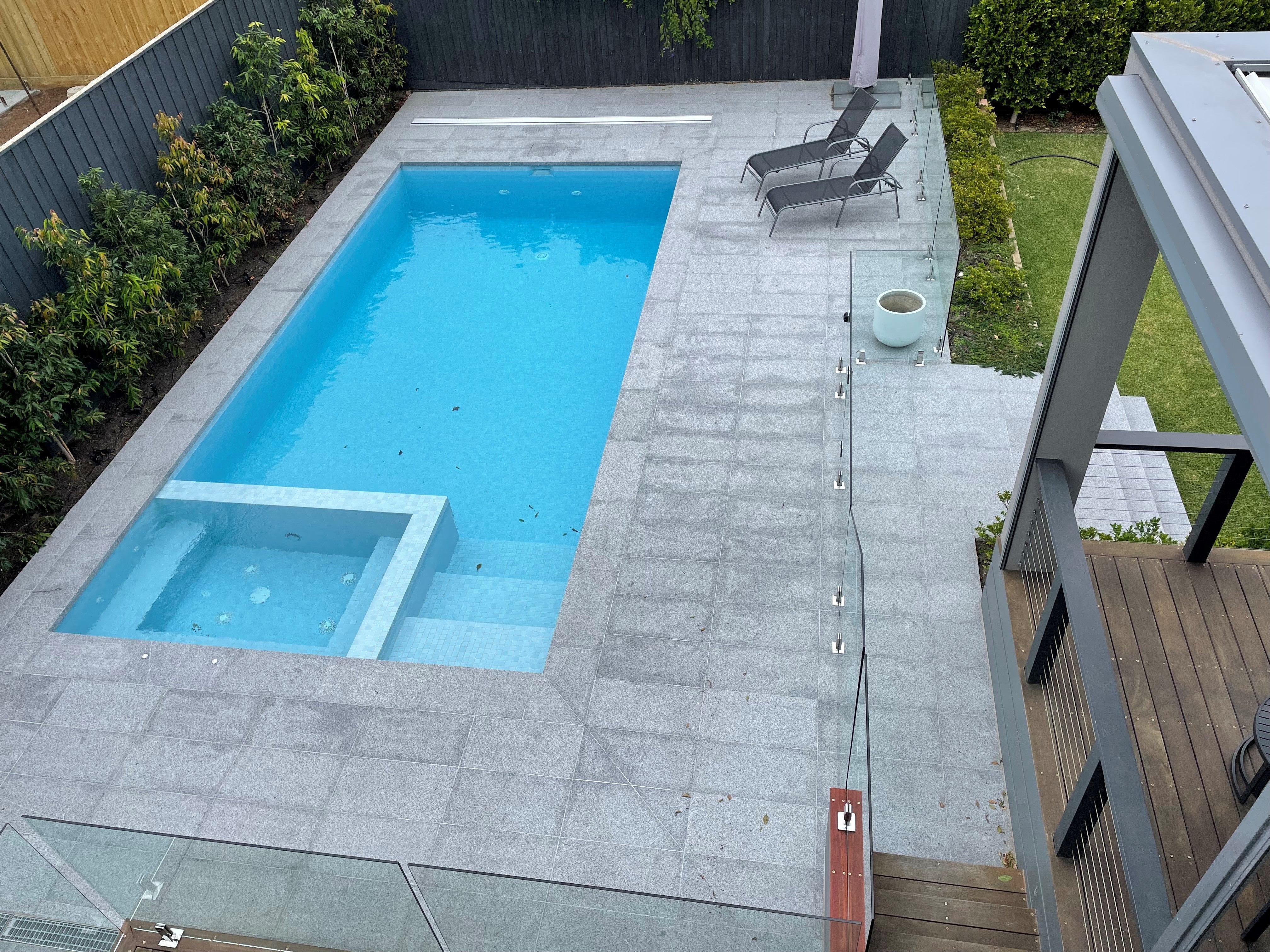
For coastal and pool environments, the salt load in the atmosphere and water compounds the problem further. Plus Sealer is engineered specifically for these conditions, with enhanced resistance to salt and chemical exposure.
The Tile Council of North America identifies moisture management as a primary concern in exterior tile installations. Sealing the grout joint is a core part of that system.
Penetrating sealer vs film sealer

Two categories of grout sealer. One works. One causes problems.
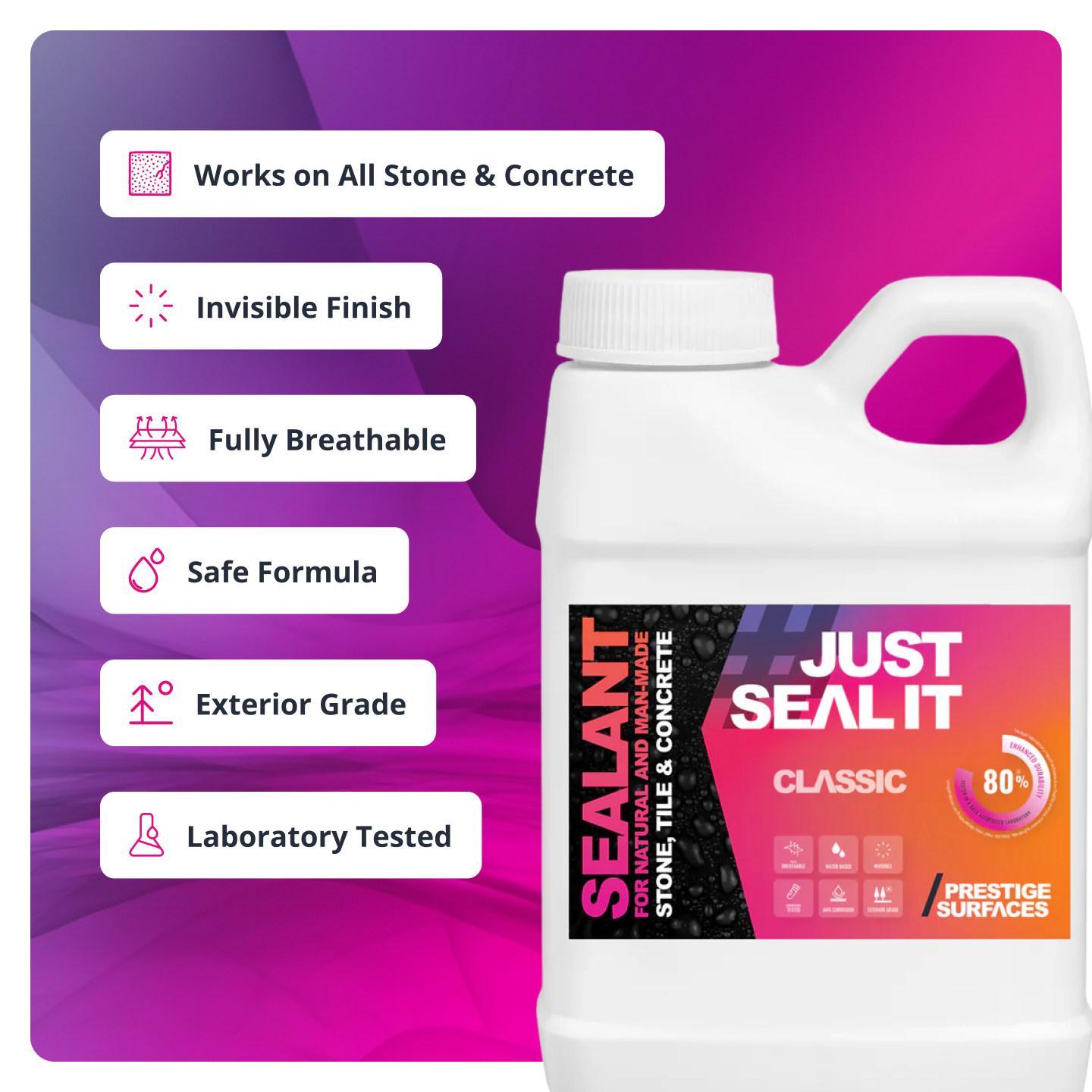
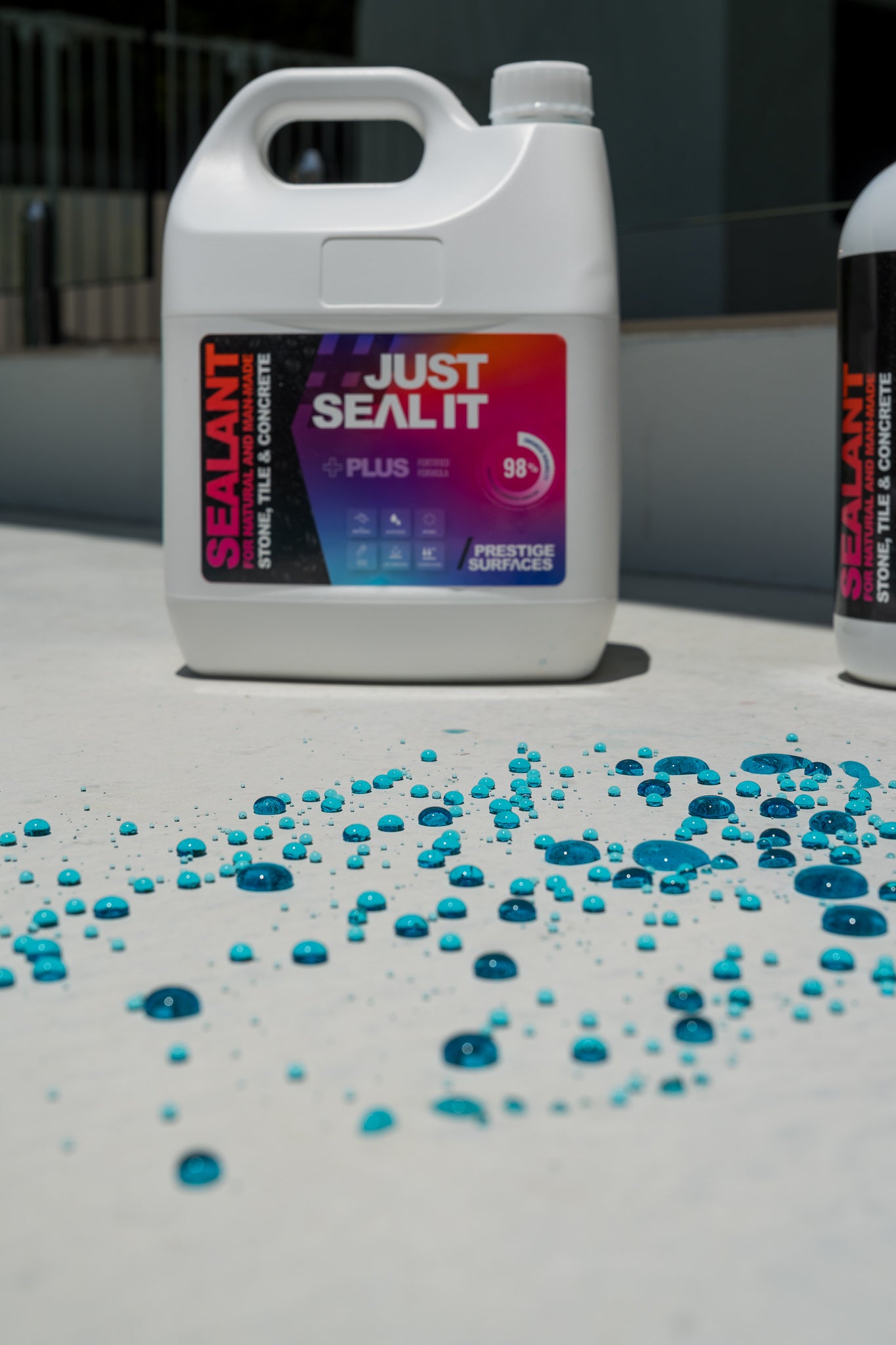
Penetrating sealers work at the molecular level. The molecules are small enough to enter the pore structure of the grout. They bond to the mineral surface from inside and create a hydrophobic barrier at the pore wall. The sealer is invisible. The grout looks exactly as it did. Unlike topical coatings, there is nothing sitting on the surface to peel, flake, or delaminate. The sealer breathes, so vapour can still move, but liquid water and contaminants are blocked.
Film-forming or membrane sealers sit on top of the surface. They create a physical coating over the grout. This coating peels. It yellows. It traps moisture underneath. On grout that has any vapour movement, it is only a matter of time before the coating lifts or blisters. Stripping it off is a worse job than the original staining.
If you can see the sealer, it's the wrong type.
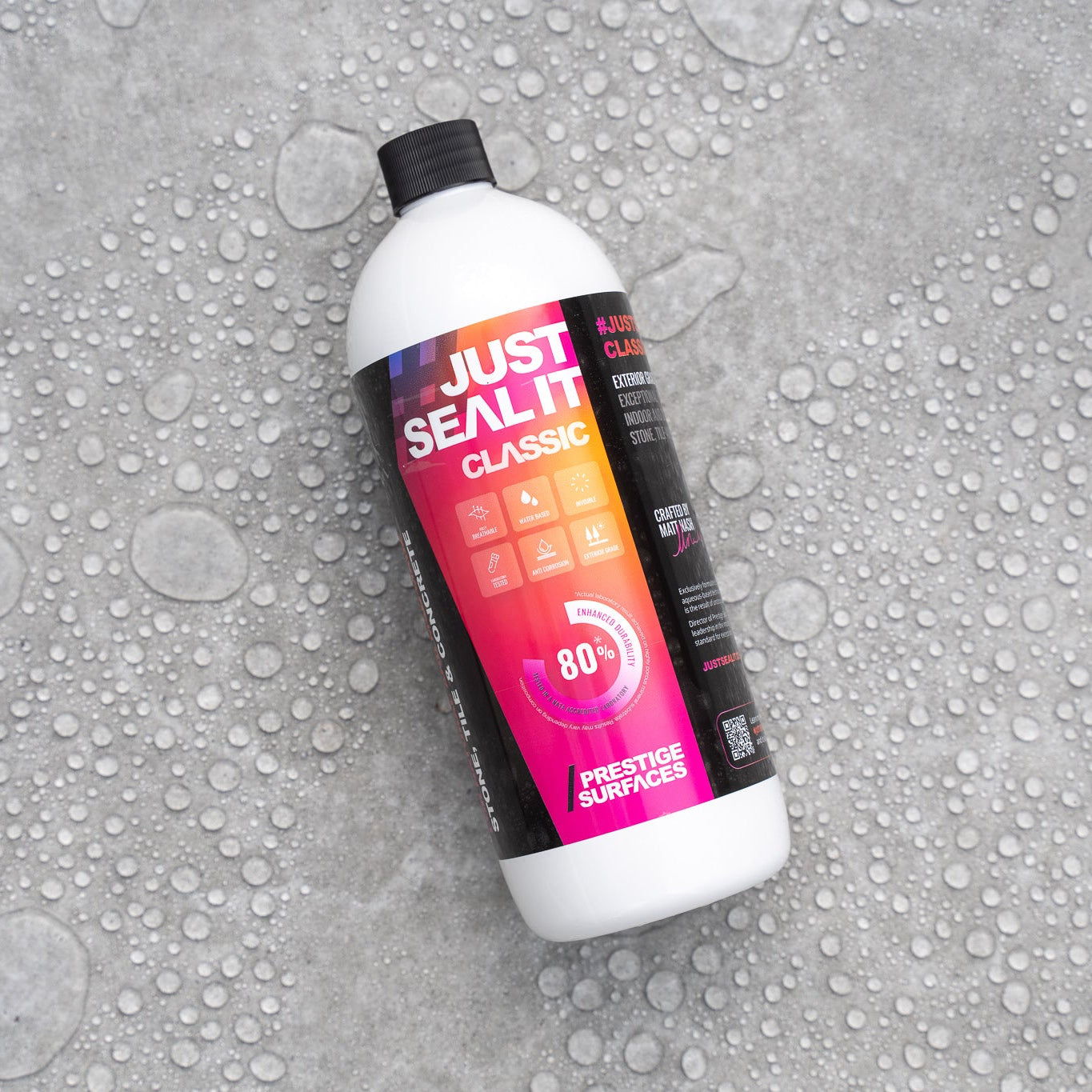
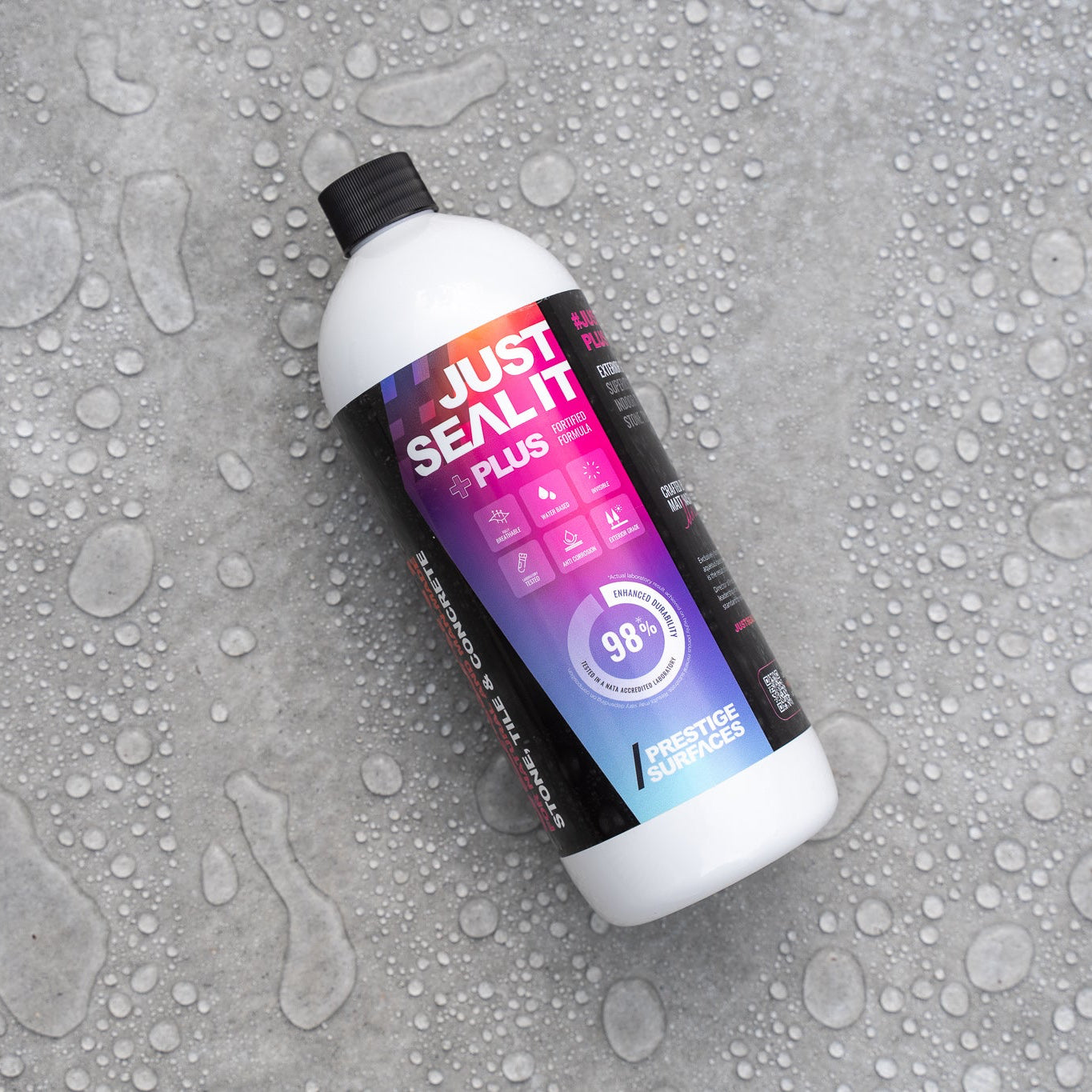
Classic Sealer uses modified silicone technologies and is suitable for most interior grout, tile surrounds, kitchen splashbacks, and bathroom floors. Plus Sealer applies the same technology with up to 98% enhanced durability (NATA-accredited laboratory) on highly porous substrates and is the right choice for outdoor grout, pool surrounds, and any environment with heavy moisture or chemical exposure.
When NOT to seal your grout
Three situations where sealing grout is the wrong move.
Epoxy grout. Epoxy grout is a two-part resin system, not cement-based. It has near-zero porosity and is factory-resistant to stains, moisture, and most chemicals. There is nothing for a penetrating sealer to bond to. If you've had epoxy grout installed and the tiler told you to seal it, get a second opinion.
Freshly laid cement grout. New grout needs 28 days to cure properly. Sealing before full cure traps moisture inside the joint. The sealer blocks the water that needs to evaporate as part of the curing process. This compromises the strength of the joint and the adhesion of the sealer. 28 days minimum. No exceptions.
Stained or dirty grout. Seal over a dirty surface and you prevent the sealer from penetrating fully. There's no fixing that without stripping and starting again. Clean the grout thoroughly, get it bone dry, confirm the grout is the colour it should be, then seal.
Clean the grout before you seal it
Sealing locks in whatever is on the surface. That is the point of it. So the surface needs to be right before the sealer goes on.
For general grime, soap scum, and surface dirt: Stone Wash diluted 1:100 is the default. pH-neutral, safe on grout, and won't leave a residue that interferes with sealer adhesion. Scrub along the joint, rinse thoroughly, and allow to dry completely.
For active mould or mildew, which is common in bathroom grout and exterior joints in shaded areas: sodium hypochlorite (diluted bleach) first. Apply, dwell for 10-15 minutes, scrub, and rinse well. Then follow with Stone Wash to neutralise. Do not apply grout sealer directly after a bleach treatment without neutralising. Alkalinity residue affects the sealer's ability to penetrate and bond correctly.
For calcium or lime deposits: acid-based cleaners are effective on hard water deposits but can damage cement grout if contact time is too long. Apply to the tile face only where possible and keep it off the grout joint itself. Rinse immediately.
The surface must be bone dry before sealing. Not damp. Not "a few hours since it was wet." Bone dry. In humid conditions or shaded areas, that can mean 24-48 hours after cleaning. If there's any doubt, wait longer. See the full application guide for surface prep specifics.
See Penetrating Stone Sealer for independent laboratory test results on sealed versus unsealed surfaces.
How to apply grout sealer

Tools: a microfibre applicator, low-pressure sprayer, or wide brush. Apply the sealer across the full surface, tiles and grout together, the same way you would seal the surrounding paving. The sealer penetrates the porous grout joints; on glazed tile faces it sits on the surface until you wipe it off.
Temperature: 10-30 degrees C. Below that, the chemistry doesn't cure correctly. Above that, the sealer dries before it penetrates. Check the surface temperature, not just the air temperature. Dark tile and grout in direct sun can be 15-20 degrees C hotter than the ambient reading.
Apply two coats, wet-on-wet. First coat across the full surface in one direction. Second coat immediately in the opposite direction before the first coat has dried. The second coat ensures even coverage and fills any gaps from the first pass.
On glazed tile, the sealer won't penetrate the vitrified surface. It sits on top until wiped off, and left too long it hazes. Work in sections of 1-2 square metres: apply across the full surface, wipe tile faces with a clean dry cloth, move on. If you let it dry across an entire bathroom floor before wiping, you'll know about it. Set a timer.
After application: light foot traffic 1-2 hours after the surface is dry to touch. Furniture back on at 24 hours. Full cure at 30 days. Avoid aggressive cleaning or pressure washing in that first month.
The Classic Clean & Seal Pack includes Stone Wash and Classic Sealer in one order, which covers the prep and seal without a separate shopping list.
How long does grout sealer last
For bathroom floors, kitchen floors, and outdoor tiles in regular use: 3-5 years before a maintenance coat is worth considering.
What shortens that lifespan more than anything else is aggressive cleaning products. Bleach used weekly. Acidic bathroom cleaners. Strong alkaline cleaning products. These don't just clean the grout. They strip the sealer over time. If you're using harsh cleaners regularly and wondering why the sealer isn't lasting, that's the answer.
The difference in longevity isn't always dramatic in the first year. It shows up later.
I've been on-site at properties where the grout hadn't been resealed for 8 or 9 years. Some joints still looked reasonable. The ones that held up had two things in common: low moisture exposure and gentle cleaning habits. The ones that didn't looked exactly as you'd expect unsealed exterior grout to look after a decade of rain, sun, and pool chemicals. The difference wasn't luck. It was what happened in the first 12 months: the right sealer, the right application, and then cleaning products that didn't fight against the protection every week.
For a full maintenance schedule and reapplication guidance, see the maintenance guide.
Frequently asked
Do I need to seal new grout?
Yes, for cement-based grout. New grout needs 28 days to fully cure first. After that, a penetrating grout sealer protects the joint from staining, moisture ingress, and efflorescence. Skipping it on new grout is the most common reason grout looks tired within two years.
Does grout sealer change the colour of grout?
A penetrating sealer applied correctly doesn't. The grout may look slightly darker immediately after application, then return to its normal colour once fully dry. That's normal. If colour change is a concern, test in an inconspicuous spot and check after 24 hours. If it stays dark, excess product was applied or the surface wasn't fully dry.
Can you seal grout in a shower?
Yes. Shower grout is one of the highest-value applications because of the constant moisture exposure. Use a penetrating sealer and ensure the shower hasn't been used for at least 24-48 hours before application. The grout needs to be completely dry. After sealing, wait the full cure period before returning to normal use.
Does epoxy grout need sealing?
No. Epoxy grout is a two-part resin system with near-zero porosity. It does not absorb moisture or staining compounds the way cement grout does. A penetrating sealer has nothing to bond to. If you have epoxy grout, no sealing is required.
What is efflorescence and does sealing stop it?
Efflorescence is white mineral salt deposits that appear when water moves through grout, dissolves soluble salts, and evaporates on the surface. On exterior grout, the salt crystals form inside the pore walls as they crystallise, causing micro-cracking and progressive joint deterioration. Sealing blocks the water pathway. No water movement through the grout means no salt transport and no efflorescence.
How do I stop grout sealer from hazing my tiles?
Apply across the full surface and work in sections of 1-2 square metres. On glazed tile the sealer sits on the vitrified surface until wiped off. Wipe tile faces with a clean dry cloth within 5-10 minutes of application. If the haze has already dried, a small amount of mineral spirits on a cloth will usually remove it without damaging the grout sealer in the joint.
How do I know if my grout has already been sealed?
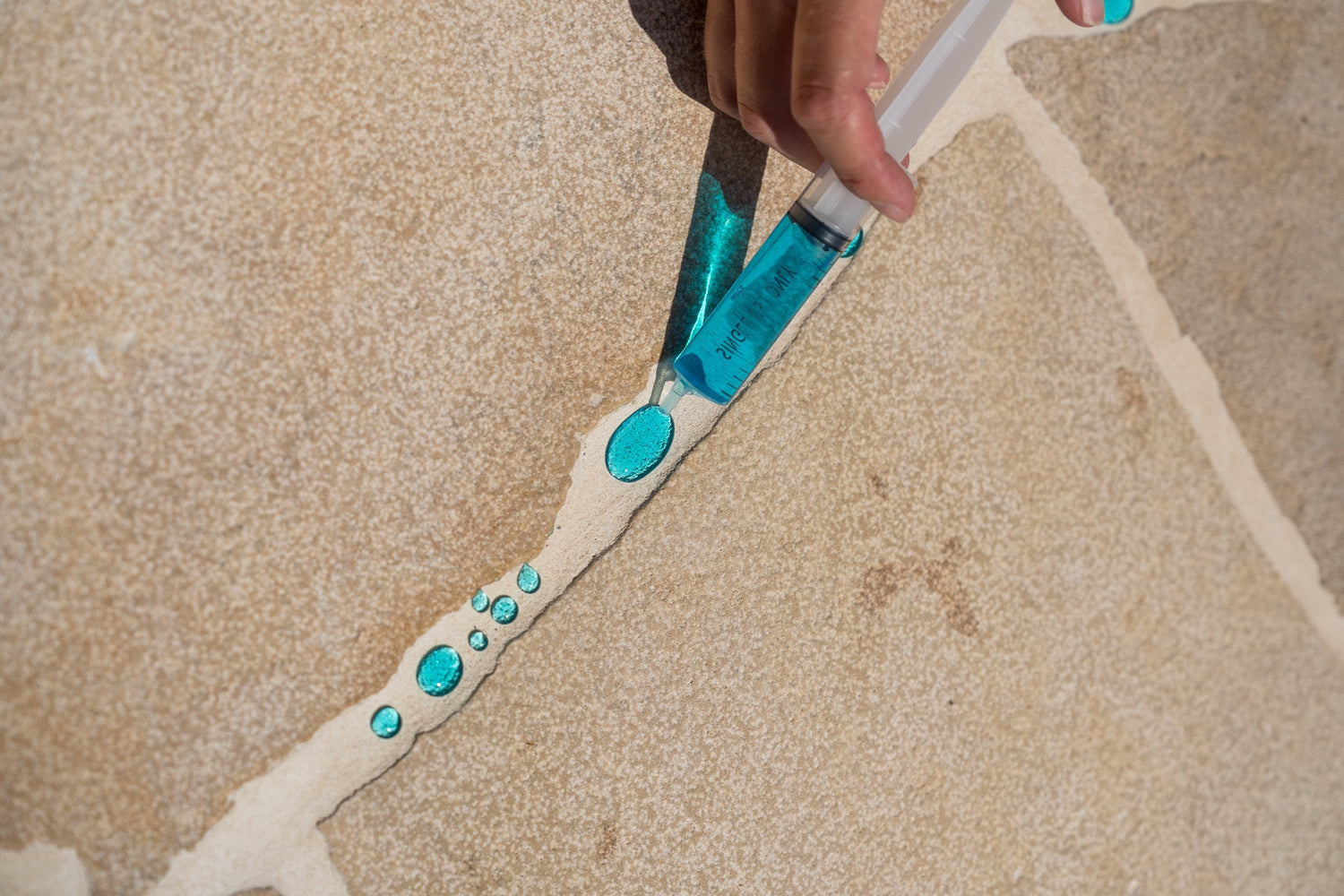
Drop a few drops of water onto the grout joint and watch what happens. If the water pools on the surface without absorbing, the sealer is still active. If the water soaks straight in and the grout visibly darkens, the sealer has worn off or was never applied. This test works on cement-based grout only. Epoxy grout will resist water absorption regardless.
Can I apply grout sealer over existing sealer?
Yes, if the existing sealer is a penetrating type that has simply worn down. The new sealer penetrates the pore structure in the same way the first application did. If the grout has a film-forming or topical sealer that is peeling or lifting, that needs to be removed first. Applying penetrating sealer over a peeling film coating won't help, and the residue blocks proper penetration.
Still stuck? Get the right product

Not sure which sealer suits your surface, how much you'll need, or whether your surface needs cleaning first: email hello@justsealit.com.au with a photo and we'll tell you. Most questions take five minutes to answer. We'd rather you get it right the first time than buy twice.